More About This Card
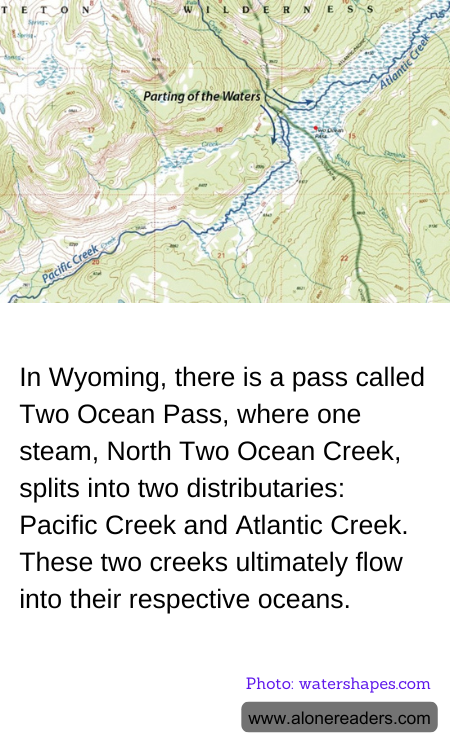
In the remote wilderness of Wyoming lies an extraordinary natural phenomenon: Two Ocean Pass, a geographical marvel that epitomizes the continental divide. Here, at an elevation where the air is thin and the landscape is dominated by rugged mountain peaks and lush forests, a small stream known as North Two Ocean Creek presents a rare hydrological feature. This creek does something almost mythical – it splits into two distributaries, each flowing into a different ocean. Pacific Creek journeys westward, eventually joining the Snake River and contributing to the waters of the Pacific Ocean. In stark contrast, Atlantic Creek flows eastward, merging with the Yellowstone River, and continuing its long journey towards the Gulf of Mexico and the Atlantic Ocean.
This unique water divide in Two Ocean Pass not only fascinates geographers and hydrologists but also attracts hikers and nature enthusiasts who are eager to stand at a point where the waters split, a place where one can literally straddle the hydrological backbone of North America. The phenomenon is especially intriguing because it illustrates how terrain and waterways dictate the vast networks of river systems that sculpt the continent.
Despite its remote location within the Bridger-Teton National Forest, the area surrounding Two Ocean Pass is accessible through various trails that offer breathtaking views and the serene beauty of untouched natural surroundings. The concept of the creek’s division, often referred to as a parting of the waters, is also a poignant reminder of the complex and interconnected nature of ecosystems. Moreover, these waters feed into major rivers that support agricultural lands, provide drinking water, and sustain plant and animal life across vast stretches of the country.
For centuries, Two Ocean Pass has held significance not only for its fascinating hydrological characteristics but also for its role in the lives of Native American tribes, explorers, and settlers who traversed these mountainous terrains. Today, it serves as a symbol of natural splendor and a critical reminder of the delicate balance between water systems and the environments they support. This remarkable site continues to draw attention for its sheer natural beauty and the compelling story it tells about the natural world.