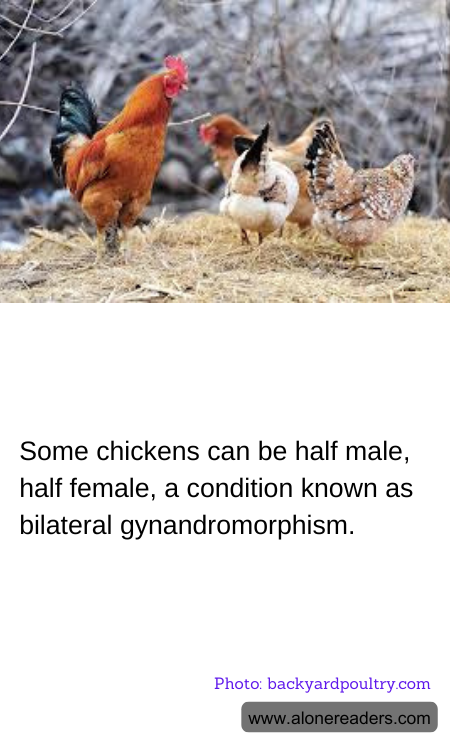
In the fascinating world of biology, some chickens exhibit a rare condition known as bilateral gynandromorphism, where they are literally split down the middle, being half male and half female. This unusual phenomenon, not just limited to chickens but observed in other animals such as birds and crustaceans, is a striking example of nature's complexities.
Bilateral gynandromorphism arises from a developmental anomaly in the early stages of an embryo's growth. In typical sexual development, birds like chickens have two sex chromosomes: males carry a Z and a W chromosome (ZW), while females carry two Z chromosomes (ZZ). The gynandromorphs, however, end up with a mix of cells, some with male genetics (ZZ) and some with female genetics (ZW). This mosaic of cells leads to the organism displaying physical characteristics of both sexes, split down the middle of their body.
Visually, these animals are quite striking. On one side of the body, they might exhibit the bright plumage and larger wattle typical of a male, while the other side might display the plainer feathers and smaller physical features characteristic of a female. This split is usually lateral, meaning one side of the body is distinctly male and the other distinctly female, right down to the cellular level, including differences in muscle mass, feather arrangement, and even reproductive organs.
Scientific interest in bilateral gynandromorphism extends beyond mere curiosity. Studying such conditions can provide insights into the development and function of sex chromosomes and the complexities of genetic expression. For instance, researchers can explore how certain cells with male chromosomes and others with female chromosomes can coexist and form functioning organs and systems within the same organism.
Moreover, studying these chickens helps deepen understanding of sexual dimorphism— the distinctions in appearance between males and females of the same species— and embryonic development. It also touches upon broader topics such as hormonal influences, since the different sides of the body may respond differently to hormones, influencing everything from behavior to physical growth patterns.
Despite their rarity, gynandromorphic chickens are more than just biological oddities. They challenge traditional notions of gender and sex in the animal kingdom and point to the incredible diversity of nature's developmental patterns. As research continues, these unique birds will likely continue to offer valuable insights into the genetic and hormonal underpinnings of sex and development in animals. Their study not only fascinates but also contributes to the broader fields of genetics, endocrinology, and evolutionary biology.
