More About This Card
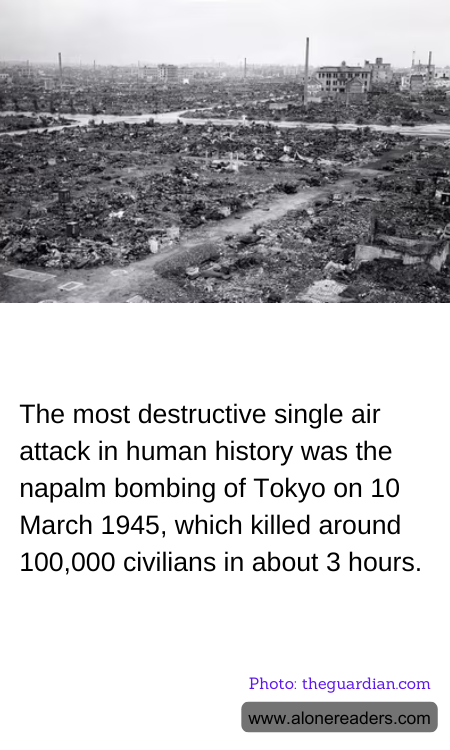
On the night of March 10, 1945, Tokyo, the bustling capital of Japan, was subjected to one of the most devastating air attacks in human history. Orchestrated by the United States Army Air Forces, this attack involved a massive bombing raid that utilized incendiary bombs, primarily composed of napalm. The raid, known as Operation Meetinghouse, aimed to cripple Japan's war production capabilities but also resulted in unprecedented civilian casualties and destruction.
The raid began in the late hours, with B-29 bombers flying at a relatively low altitude to increase the accuracy and effectiveness of their payload. The bombs used were specifically designed to set the city ablaze, targeting Tokyo's densely populated residential areas composed largely of wooden structures. The resultant fires were so intense and widespread that they created a firestorm, significantly increasing the rate and scope of the devastation.
The human toll of this single attack was staggering. Approximately 100,000 civilians lost their lives over the span of just a few hours, surpassing the immediate deaths from the atomic bombings of Hiroshima and Nagasaki later that year. The firestorm engulfed about 15.8 square miles of the city, destroying over one million homes and leaving countless people homeless. The dense smoke and immense heat generated by the inferno made rescue operations and escape nearly impossible for the victims.
The psychological and moral implications of the Tokyo firebombing have been the subject of much debate. While the raid significantly impaired Japan’s capacity to continue the war, the strategy of targeting civilian areas with such ferocity sparked discussions on the ethics of total war and the use of airpower against urban centers. This event also set a precedent for the subsequent atomic attacks and has since been examined as an example of the extreme measures employed in wartime scenarios.
Today, the memory of the Tokyo bombing serves as a poignant reminder of the destructive potential of air warfare and the profound human suffering it can cause. It underscores the importance of rules of engagement and the need for measures to protect civilians in times of conflict. The tragedy of Tokyo exposes the grim realities of war and the urgent necessity for peace and understanding among nations to prevent a recurrence of such devastating events.