More About This Card
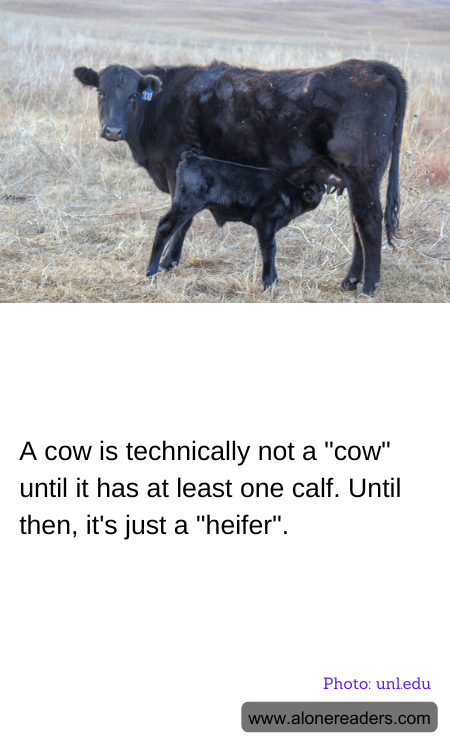
In the world of cattle farming and animal husbandry, the terminology used to describe cattle is often specific and reflects the animal’s age, sex, and reproductive status. For instance, a female bovine is not considered a "cow" in the truest agricultural sense until she has given birth to at least one calf. Prior to this, she is referred to as a "heifer." This distinction is not just a matter of semantics but has practical implications for farmers and those involved in the breeding and raising of livestock.
Heifers are typically younger female cattle that have not yet borne calves and are under three years of age. The period before a heifer becomes a cow is crucial, as it involves growth and development that will affect her ability to reproduce and lactate. Farmers pay close attention to the nutrition, health, and overall welfare of heifers to ensure they are in optimal condition for their first pregnancy, as this can impact their productivity and longevity in the herd.
The transition from heifer to cow usually occurs after the heifer becomes pregnant and gives birth to her first calf. This milestone is significant in a bovine’s life and marks her entry into adulthood where she will contribute to the production of milk and the continuation of the herd through reproduction. Post-calving, these animals are officially categorized as cows and are often valued higher than heifers due to their proven fertility and potential milk production.
Understanding the distinction between a cow and a heifer is essential for managing a successful cattle operation. It helps in record-keeping, making breeding decisions, and even in marketing livestock. For instance, knowing the ages at which heifers are bred, when they calve, and how they are cared for post-calving can greatly influence a farm's efficiency and productivity. Additionally, during transactions involving cattle, clear distinctions among terms ensure both buyer and seller are well-informed about what is being sold or purchased, avoiding confusion and ensuring transparency.
Ultimately, while to the untrained ear the difference between a cow and a heifer may not seem significant, for those in the farming industry, these terms are critical for the daily management and the economic aspects of cattle farming. They reflect not only the biological status of the cattle but also their economic value and role within the farm's ecosystem.