More About This Card
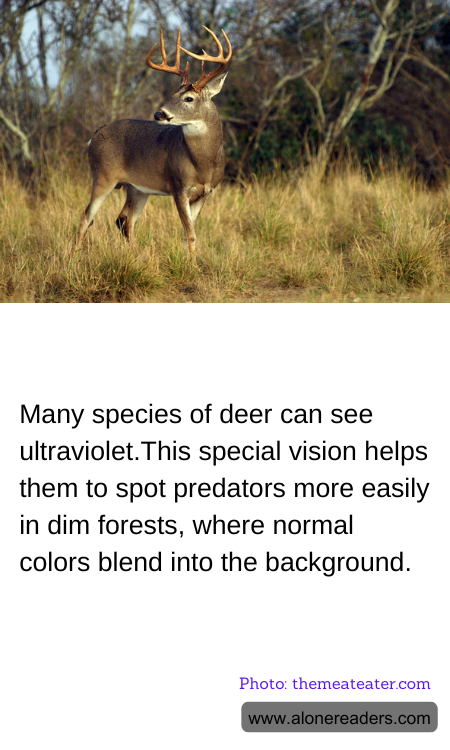
Deer possess an extraordinary vision capability that gives them a significant advantage in their forest habitats. Unlike humans, many deer species have the ability to see ultraviolet light, a feature that is crucial for their survival. This unique aspect of their vision helps them detect potential threats and navigate through their environment more effectively, especially under conditions where visibility is low.
In the dense and often dimly lit forest environments where deer commonly reside, distinguishing colors as humans see them becomes less relevant. Predators that might blend into the background in the normal visual spectrum can be more easily spotted by deer thanks to their ultraviolet sight. For instance, the fur of many predators does not reflect ultraviolet light in the same way as the plants and other materials surrounding them. This contrast allows deer to detect movement and shapes that might otherwise be camouflaged.
Moreover, this ultraviolet vision plays a vital role during dawn and dusk, times when deer are most active. The low light levels during these periods make it particularly challenging to see, yet ultraviolet light is more prevalent. This ability likely gives deer an evolutionary advantage, contributing to their survival and reproduction by mitigating predation risks.
Interestingly, the evolutionary development of ultraviolet vision in deer also impacts how they perceive their environment in other ways. It may influence everything from foraging habits to social interactions, as it alters the visual cues they receive and respond to. This aspect of deer biology highlights not only the complexity of evolutionary adaptations but also the interconnectness of ecosystems and the creatures within them.
Understanding these visual capabilities in deer not only fascinates from a biological perspective but also has practical implications. For example, it can influence how deer management strategies are implemented, including how to better design deer crossings or manage hunting practices to ensure ecological balance. In essence, the ultraviolet vision of deer is a perfect example of how wildlife adapts to its surroundings, using every available tool to navigate, survive, and thrive in the wild.