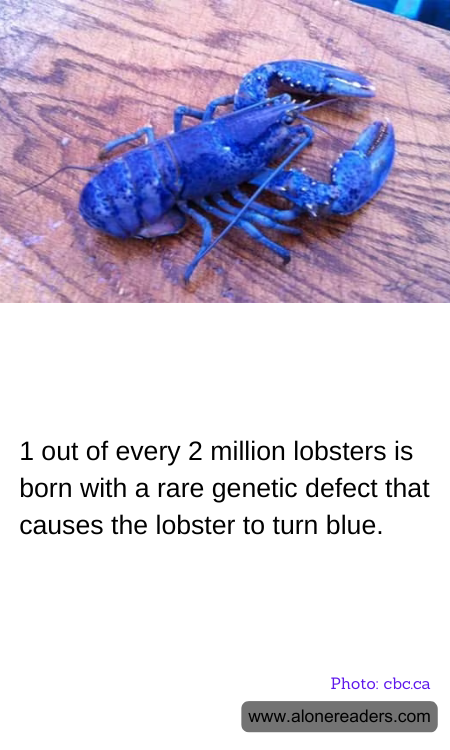
One of the fascinating quirks of nature is seen in the rare blue lobster. This striking color variation is the result of a genetic anomaly that affects approximately one out of every two million lobsters. The typical reddish-brown appearance of most lobsters is due to a mix of pigments in their shells. However, blue lobsters produce an excess amount of a particular protein that binds with a molecule called astaxanthin. This combination forms a blue complex known as crustacyanin, giving these unique lobsters their vivid hue.
While catching a glimpse of a blue lobster is a rare occurrence, these lobsters are perfectly healthy and live the same life cycle as their more commonly colored counterparts. However, their rare color makes them a target for shell collectors and can often spare them from the cooking pot, as many fishermen choose to release them back into the ocean or donate them to aquariums. In captivity, these lobsters can become a significant draw for visitors, contributing to educational programs about marine biodiversity and conservation efforts.
Despite their rarity, blue lobsters are subject to the same threats as any other marine crustacean, including habitat destruction, pollution, and the impacts of climate change. Conservation efforts are crucial to ensure that the wild populations of lobsters, blue or otherwise, are sustained not only for their ecological importance but also for their commercial value to fisheries around the world. Thus, while the blue lobster serves as a stunning example of genetic variation, it also highlights the broader issues facing marine environments and the importance of sustainable practices in oceanic ecosystems.
