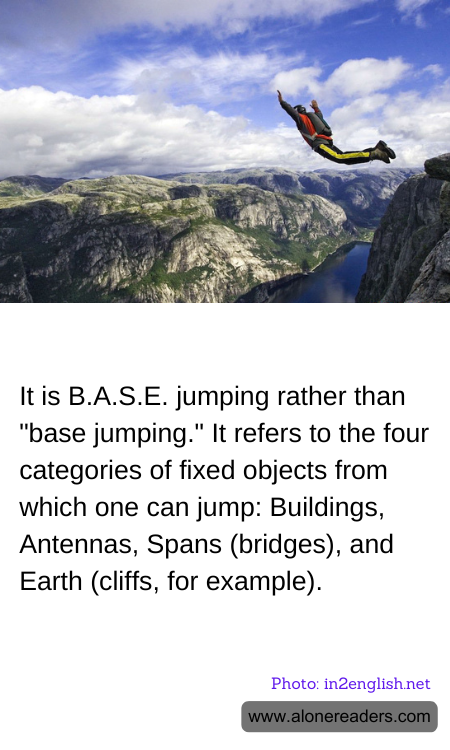
B.A.S.E. jumping is an extreme sport that involves parachuting or wingsuit flying from fixed objects, with "B.A.S.E." being an acronym for the types of platforms from which participants can jump: Buildings, Antennas, Spans (which typically refer to bridges), and Earth (such as cliffs and mountains). Due to its high risk and the level of skill required, B.A.S.E. jumping is considered more dangerous than skydiving from an aircraft and is legally restricted or banned in many locations.
This thrill-seeking activity appeals to those who crave adrenaline and are drawn to the challenge of leaping from static structures. Not only do B.A.S.E. jumpers experience the rush of free-falling but also the scenic vistas that often accompany such jumps, especially those from natural formations. The sport requires meticulous preparation, expert understanding of weather conditions, and precise execution of the jump and parachute deployment.
Safety measures are paramount in B.A.S.E. jumping. Jumpers typically wear a parachute specifically designed for quick deployment, given the lower altitudes of jumps compared to skydiving. Some may also wear a wingsuit, which allows the jumper to glide horizontally while falling, thereby increasing the duration of their flight before deploying their parachute. Despite these precautions, the proximity of jump platforms to the ground and other structures adds unavoidable risk.
The legalities surrounding B.A.S.E. jumping vary widely by region, with some areas embracing the sport under regulated conditions and others imposing strict bans due to safety concerns and past accidents. For enthusiasts seeking to participate in B.A.S.E. jumping, it's critical to thoroughly research and adhere to local regulations, gain substantial parachute experience, and, when possible, seek guidance from experienced jumpers. This careful approach not only ensures personal safety but also helps in fostering positive relationships with local authorities and communities, facilitating the future of the sport in different locations.
