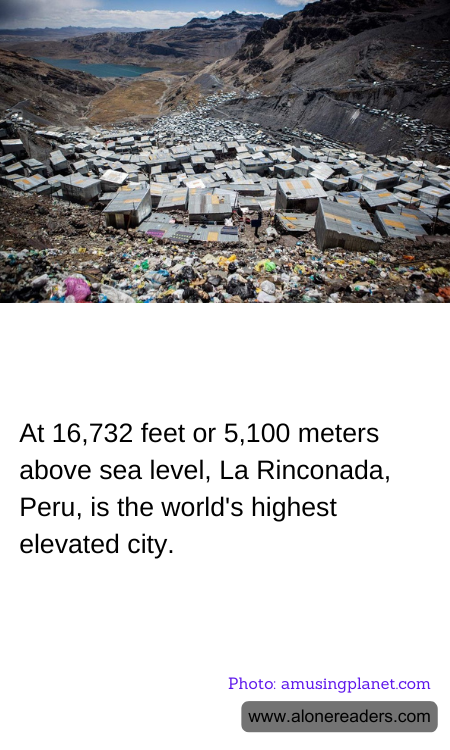
Perched high in the Peruvian Andes, La Rinconada stands as the world's highest elevated city, sitting at a staggering altitude of 16,732 feet or 5,100 meters above sea level. This remarkable settlement has grown significantly over the years, primarily as a result of the gold rush that has drawn both fortune seekers and economic migrants to its challenging environment. The city is uniquely positioned near gold mines that are among the highest on Earth, which continue to serve as the backbone of its local economy despite the extreme conditions.
Living in La Rinconada presents a host of challenges, primarily due to its remote location and harsh climatic conditions. Residents often face the brutal realities of cold temperatures, thin air, and a lack of oxygen, which can lead to altitude sickness and other related health issues. The city lacks basic infrastructure; there are no formal sanitation systems, and most of the buildings are rudimentary. The environmental impact is also significant, with mining practices leading to pollution and degradation of the surrounding landscape.
Despite these hardships, the allure of gold continues to attract people from far and wide, hoping to find their fortune in the unforgiving terrain. The community is predominantly made up of miners who work in precarious conditions, often without proper safety measures or guarantees of a stable income. The economic structure is largely informal, and the fluctuating price of gold heavily influences the livelihood of its inhabitants.
Socioculturally, La Rinconada is a blend of indigenous Andean traditions and the diverse influences brought by migrants. This mixture is reflected in local customs, cuisine, and celebrations, which often provide a communal sense of relief from the daily grind. However, the city's inaccessibility also means that education and healthcare services are severely limited, impacting the quality of life and future opportunities for residents, especially children.
The story of La Rinconada is a powerful example of human resilience and the lengths to which people will go in pursuit of economic opportunity. Despite its isolated and inhospitable setting, the city's population continues to grow, highlighting the complex interplay between human needs, environmental limits, and the global economy. The future of La Rinconada, like its geography, hangs in a delicate balance, shaped by both the potential rewards and the considerable risks associated with life at the top of the world.
