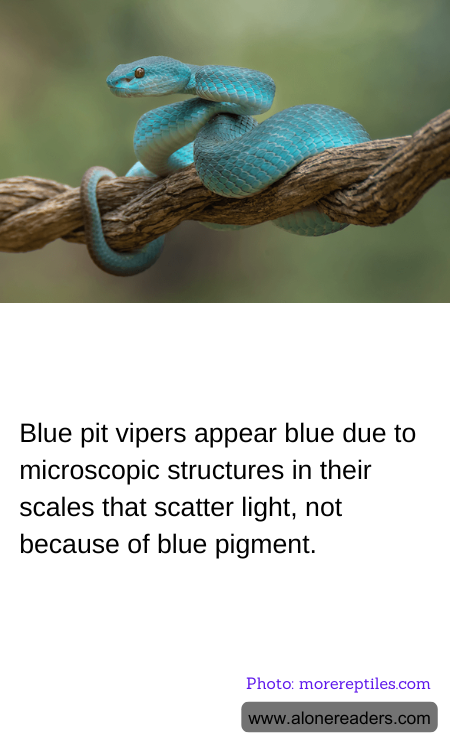
The enchanting blue hue of blue pit vipers is a result not of blue pigments in their scales, but rather the intricate play of light scattering caused by microscopic structures on their surfaces. This phenomenon, known as structural coloration, is common in the natural world and can be seen in the vibrant colors of peacock feathers and butterfly wings. In the case of the blue pit viper, these tiny structures are shaped in such a way that they preferentially scatter blue light, which then dominates their appearance.
What makes this particularly fascinating is that the color does not fade over time, as it might with pigmentation. Instead, the intensity and hue of the blue can change depending on the angle of light and the viewer's perspective, giving the snake a dynamic and vivid appearance. This form of coloration serves multiple purposes; it can be used as a form of camouflage among the blues and greens of their natural habitat, helping them to hide from predators or ambush prey. Additionally, the striking coloration could play a role in communication between individuals, perhaps relating to mating or territorial disputes.
Another aspect that adds depth to our understanding of these snakes is how rare true blue coloration is in animals due to the absence of genuine blue pigments in vertebrates. The blue pit viper’s adaptation showcases an evolutionary niche where these reptiles have developed a unique method to display such vibrant blue without relying on pigments. This blue coloration is rare and specific to certain populations, highlighting a remarkable case of evolutionary adaptation.
Moreover, the study of these snakes and their color mechanisms is not only a curiosity for herpetologists but also holds potential implications for technology and material science. Mimicking the way these snakes scatter light could lead to innovations in creating vibrant, colorfast materials without the use of chemical pigments, which can be toxic and fade over time.
Thus, the blue pit viper remains a stunning example of nature’s ingenuity in design and adaptation, reminding us that sometimes the most effective means of survival come from the most unexpected sources. This characteristic makes the blue pit viper not only a subject of scientific inquiry but also a marvel to reptile enthusiasts and nature lovers alike.
