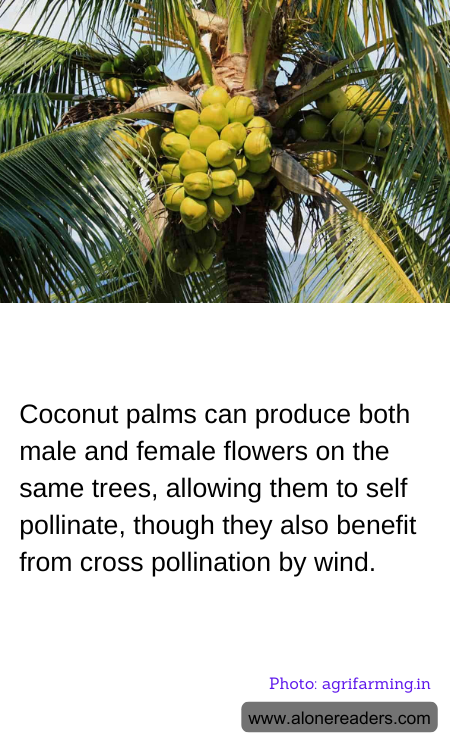
Coconut palms (Cocos nucifera) are intriguing examples of plants that bear both male and female flowers on the same individual, a trait known as monoecy. This feature allows them to self-pollinate, which can be vital for reproduction, especially in isolated conditions. However, they also gain advantages from cross-pollination, primarily aided by the wind, and to some extent, by insects like bees. The process enhances genetic diversity within the population, leading to more resilient plants.
The male and female flowers of the coconut palm are distinct yet grow on the same plant. The male flowers, which are more abundant, typically appear at the tip of the flowering stalk, while the female flowers are larger and found at the base. Male flowers release pollen, which can either fertilize the ovules of the same tree or be carried by wind to other trees, leading to cross-pollination. This dual strategy—self-pollination and cross-pollination—ensures that the plant can reproduce in a variety of environmental conditions and scenarios.
Self-pollination in coconut palms is particularly useful for maintaining genetic traits over generations and ensuring that a given successful phenotype persists in less diverse environments. However, the downside is that it might lead to reduced genetic variability and potential inbreeding depression over time. On the other hand, cross-pollination introduces new genetic combinations into the population, increasing variability and potentially leading to new traits that might be more favorable in changing environmental conditions.
Despite the plant's ability to pollinate itself, the role of wind in spreading pollen cannot be understated. Wind pollination helps in maximizing outreach to isolated or far-flung individuals, crucial for the propagation and overall survival of the species in various locales. The dynamic reproductive strategy of the coconut palm exemplifies the complex interplay between plant biology and environmental factors, highlighting how plants have adapted to maximize their reproductive success through both self-reliance and interaction with broader ecological systems.
