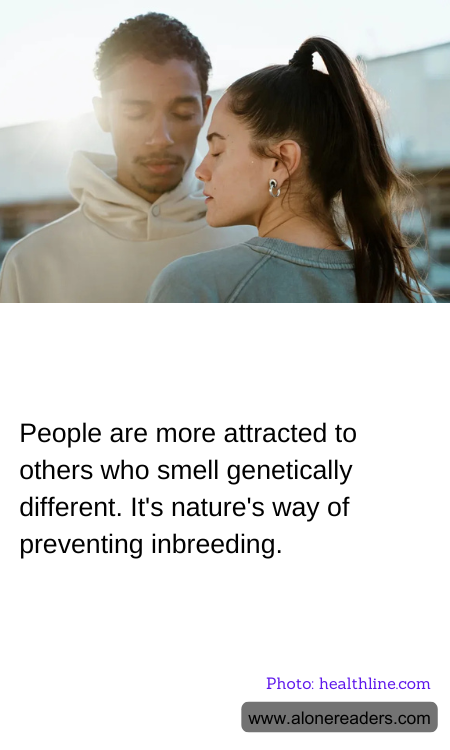
One of the most fascinating aspects of human attraction is the way in which our senses play a key role, particularly the sense of smell. Subtle yet powerful, body odor can provide significant cues about genetic compatibility. Research has consistently shown that people are often instinctively more attracted to potential partners who have a genetic makeup different from their own. This phenomenon, rooted in the biological desire to enhance the genetic diversity of potential offspring, is a strategy nature employs to decrease the likelihood of inbreeding and to bolster the immune systems of future generations.
The major histocompatibility complex (MHC), a gene group that regulates our immune system, is pivotal in this mechanism. Studies indicate that the scents we emit are influenced by these genes, and that our body odor can provide unconscious signals about our genetic makeup. When individuals with dissimilar MHC genes meet, they may find each other’s scent more appealing. This, in theory, would lead to progeny that has a broader, more robust immune defense owing to the greater variety in MHC genes.
Interestingly, this preference can be observed in the "sweaty T-shirt experiment," a famous study where women were asked to smell T-shirts that had been worn by men for several days and to rank them based on attractiveness. Overwhelmingly, women preferred the scent of shirts worn by men with dissimilar MHC genes. Such preferences suggest that olfactory cues play a significant role in mate selection, guided by biology’s ultimate aim of ensuring healthier, genetically diverse offspring.
Adding another layer are modern influences on natural processes, such as the use of perfumes and deodorants that can mask natural odors. Similarly, lifestyle choices, diet, and even medication can alter an individual’s natural scent, potentially influencing mate selection in ways unseen in previous generations. Moreover, cultural factors also interplay with these biological mechanisms, shaping and sometimes complicating the ways individuals connect and form relationships.
Despite the advanced social structures and technologies humans have developed, many of our interpersonal relationships are still influenced by primal instincts and ancient genetic coding. Understanding the role of scent and genetic variation in attraction not only highlights the complexity of human relationships but also underscores the profound influence of nature on human behavior. Such insights not only deepen our understanding of human attraction but also reflect the nuanced interplay between evolution, biology, and modern life in shaping human social behavior.
