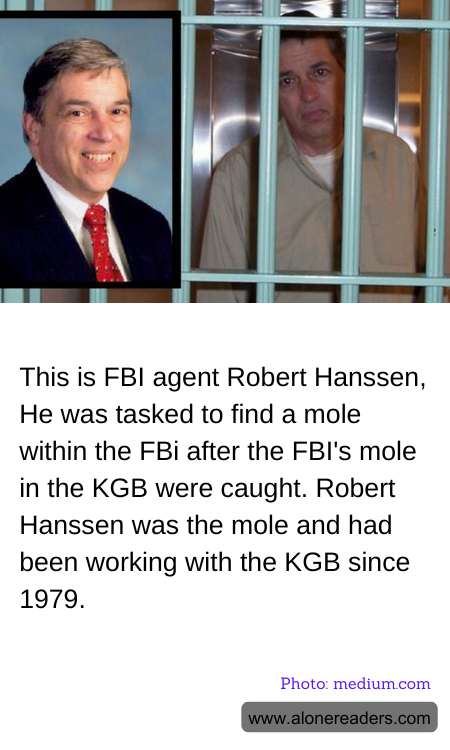
Robert Hanssen's story is a chilling narrative of betrayal that unfolded within the very walls of the FBI, an agency tasked with protecting American national security. Hanssen, an FBI agent, was ironically assigned the job of unmasking a mole within the agency after the discovery that the FBI's own infiltrator in the KGB had been exposed. The twist? Hanssen himself was the mole, having secretly begun his double life as a spy for the Soviet Union, and later Russia, in 1979.
Hanssen’s espionage was driven by a complex mix of financial incentives, a craving for excitement beyond his perceived mundane bureaucracy, and a deeply rooted resentment against his employers, whom he felt did not adequately recognize his talents or contributions. Over more than two decades, Hanssen passed thousands of classified documents to the KGB, including sensitive national security information, details of the U.S. government’s electronic surveillance techniques, and identities of Russians spying for the United States. His disclosures not only endangered lives but also compromised several FBI and CIA operations.
One of the most cunning aspects of Hanssen's spycraft was his ability to evade detection. He seldom directly handed over documents to his handlers, instead choosing drop-off points and employing sophisticated methods for communication. This includes the use of digital encryption and leaving packages under a bridge or other pre-designated hidden sites. His actions were driven by a mixture of arrogance and meticulous attention to detail, which allowed his treachery to go unnoticed for years.
The betrayal came to an end in February 2001 when Hanssen was finally arrested after being caught red-handed leaving a package for his Russian handlers at a drop site in Virginia. His motive appeared to be purely financial and ego-driven, as he received over $1.4 million in cash and diamonds over the years for his services. Hanssen was charged under the Espionage Act and sentenced to life in prison without the possibility of parole after pleading guilty to 15 counts of espionage in July 2001. The case remains one of the most notorious in the history of American intelligence and a stark reminder of the threats from within.
Through this grave breach of trust, Hanssen inflicted immeasurable damage on national security, proving that sometimes the most dangerous threats come not from external enemies, but from within. His life and crimes have since been the subject of numerous studies, books, and films, trying to unravel the psyche of one of the most enigmatic traitors in American history.
