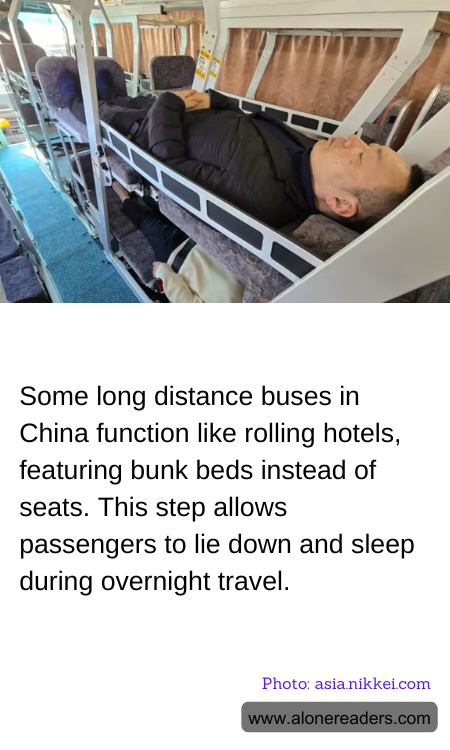
Innovative transportation solutions are constantly emerging in various parts of the world, catering to the specific needs of travelers. China has taken a unique approach to enhancing long-distance bus travel by transforming standard buses into what can aptly be described as rolling hotels. These buses have been reengineered from the traditional seating arrangement to include bunk beds, allowing passengers the comfort and convenience of lying down and sleeping during their journey.
This adaptation is particularly beneficial for overnight travelers covering vast distances across China. Instead of upright, cramped seating, passengers are greeted with the horizontal comfort of a bed, maximizing the potential for rest and rejuvenation. Each bunk is typically equipped with privacy curtains, lighting, and sometimes even outlets for charging electronic devices, mirroring the amenities of a basic sleeping compartment on a train.
The concept is rooted in practicality. China's vast geography means that travel times can be extended, and the cost of flights can be prohibitive for the average traveler. Overnight buses with beds offer a cost-effective and time-efficient alternative. By traveling through the night, passengers can save on one night's accommodation and arrive at their destination refreshed and ready to go about their day.
This approach also underscores a broader trend in transportation towards offering more personalized and comfortable options for passengers. It reflects a shift in focus from pure utility to an experience that considers comfort, privacy, and essential human needs. As this service model continues to gain popularity, it could potentially inspire similar adaptations in other areas with extensive travel distances or night travel preferences, such as in Australia, Canada, or the United States.
Moreover, this development in long-distance bus travel is not just about comfort—it also speaks to the increasing demand for smarter travel solutions that efficiently use time and resources. It can be seen as a part of the larger movement towards sustainable travel practices, where reducing the need for multiple modes of transport for a single trip can lead to significant reductions in carbon footprints.
Overall, China's implementation of buses that function as rolling hotels reflects an innovative fusion of hospitality and transport. It caters well to the needs of modern, budget-conscious, and environmentally aware travelers, and sets a benchmark for future developments in public and long-distance transport worldwide.
