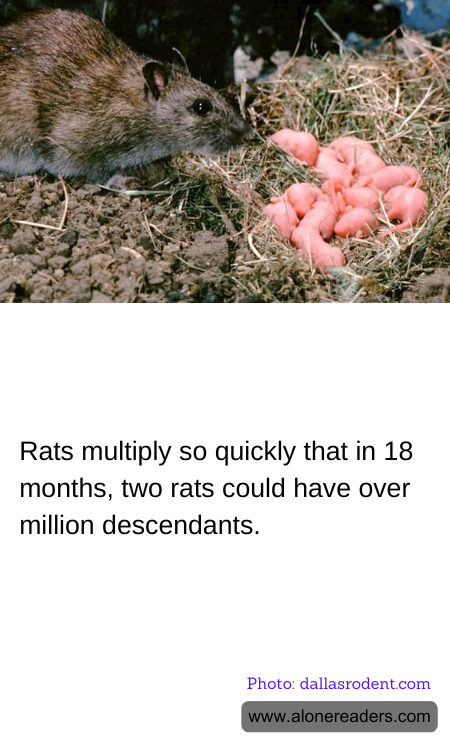
Rats are among the most prolific reproducers in the animal kingdom, and their ability to multiply rapidly can have significant ecological and urban implications. The notion that two rats could produce over a million descendants in just 18 months might sound astounding, but it highlights the potential exponential growth rate of rat populations under ideal conditions.
The reproductive cycle of rats plays a crucial role in their population explosion. Females can begin reproducing as early as five weeks of age and can have about five to six litters per year, with each litter consisting of up to twelve pups. This high birth rate is compounded by the fact that the offspring themselves become sexually mature in just a matter of weeks, thus contributing to the gene pool and increasing the population further.
This rapid reproduction rate is facilitated by the rat's general lack of predators in urban environments and their ability to consume a wide variety of food sources. Rats are omnivores and can eat everything from grains to waste, making them well-suited to thrive in diverse habitats, including city subways, sewers, and buildings.
However, the figure of a million descendants from a single pair in 18 months, while theoretically possible, would require uninterrupted ideal conditions, including ample food supply, absence of disease, and lack of predation or human control efforts. In reality, environmental factors such as disease, competition, predation, and human pest control efforts keep the population in check.
Nonetheless, the potential for such rapid growth necessitates effective pest management strategies in urban planning and household maintenance. These strategies can include sanitation, securing food sources, habitat modification, and if necessary, the humane use of rodenticides or traps.
This prolific reproduction capability of rats, combined with the ability to adapt to diverse and harsh environments, underscores the importance of ongoing research and innovative strategies in pest management to prevent large-scale infestations and the associated health risks they pose to humans. Understanding and managing rat populations is crucial for maintaining public health, property integrity, and ecological balance.
