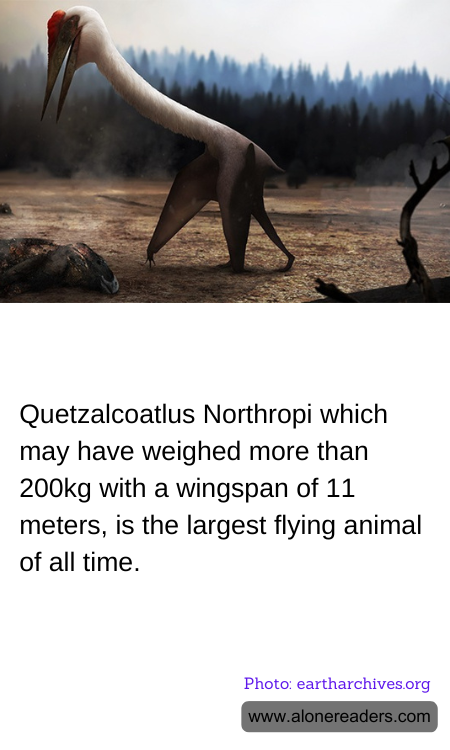
Quetzalcoatlus northropi stands out as a marvel of prehistoric life, holding the title of the largest flying animal known to have ever existed. With an estimated wingspan of roughly 11 meters—comparable to that of a small airplane—this creature dominated the skies of the Late Cretaceous period about 68 million years ago. Named after the Aztec feathered serpent god Quetzalcoatl and the Northrop Corporation, which is noted for its aircraft production, this pterosaur combined both mythic and modern elements in its representation.
Despite its majestic wingspan, it is the speculated weight of Quetzalcoatlus that truly astounds; some estimates suggest it could have weighed more than 200 kilograms. Such a substantial mass presents paleontologists with intriguing questions about flight mechanics and behaviors. How such a massive creature managed to take off, fly, and land remains a topic of research and debate. It's likely that Quetzalcoatlus used a combination of strong leg muscles and updrafts from air currents to help it lift off from the ground.
The environment of Quetzalcoatlus was markedly different from today's landscapes, characterized by vast inland seas and lush vegetation, which would have influenced its feeding and nesting behaviors. This pterosaur was likely a carnivore, possibly preying on small dinosaurs and other animals. Its long, stiffened neck and sharp beak would have been advantageous in catching and consuming a variety of prey.
Quetzalcoatlus's existence underscores the incredible diversity and adaptability of pterosaurs, which varied dramatically in size and form. As scientists continue to unearth and study more fossilized remains, the understanding of these ancient giants continues to evolve, providing fascinating insights into life millions of years before the emergence of humans and modern wildlife. Quetzalcoatlus northropi remains not only a symbol of prehistoric aerial prowess but also a reminder of the complex and dynamic history of life on Earth.
