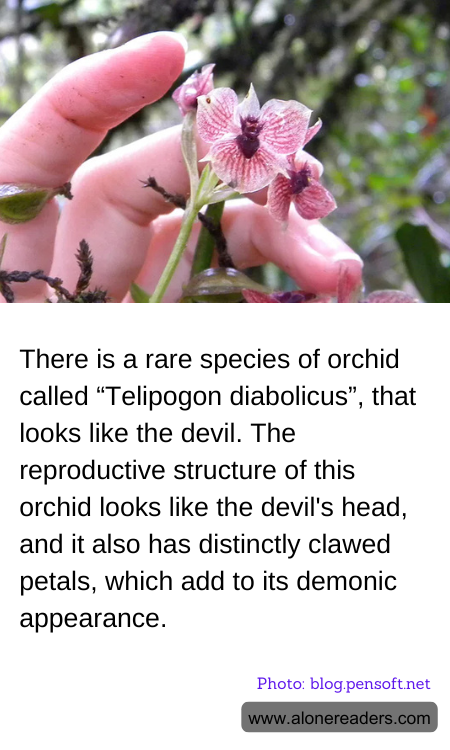
The Telipogon diabolicus is an orchid species that has captivated both scientists and enthusiasts alike with its unique and striking appearance, reminiscent of a devil's head. Discovered in southern Colombia, this rare and endangered species grows primarily at altitudes ranging between 1,500 and 2,000 meters, often nestled within the fragments of cloud forests. The visualization of a devil emerges in its flower primarily due to the configuration of its reproductive structures, featuring deep maroon and purplish hues coupled with the flower’s claw-like petals, intensifying its eerie visage.
The appearance of Telipogon diabolicus is not merely a fascinating aesthetic, but it plays a critical role in its pollination strategies. This orchid relies on mimicry to attract pollinators, a common tactic in the plant kingdom where a species imitates another organism or object. In the case of Telipogon diabolicus, its distinct appearance might serve to lure specific insects, which perceive the flower as a potential mate, thus ensuring the transfer of pollen.
The unique characteristics that define the Telipogon diabolicus have also resulted in significant attention for conservation efforts. Its habitat is shrinking due to deforestation and the expansion of agriculture, making its environment increasingly vulnerable. Conservationists stress the importance of preserving its native cloud forests to ensure this orchid, and many other species dependent on this habitat, can survive for future generations to study and enjoy. Campaigns for awareness and local engagement in conservation practices are crucial in safeguarding such rare ecological wonders.
