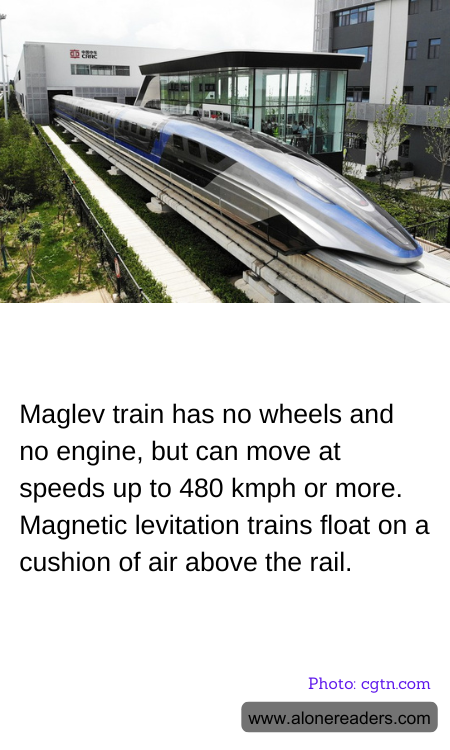
Maglev, short for "magnetic levitation," is a system of train transportation that uses two sets of magnets: one set to repel and push the train up off the track, thus enabling it to levitate anywhere from 1 to 10 centimeters above the track, and another set to move the levitated train ahead at great speed while maintaining control of the direction. The distinct lack of physical contact with the track dramatically reduces friction, which is typically a limiting factor in the speed of wheeled transport. This reduction in friction not only allows these trains to achieve astonishing speeds—over 480 kilometers per hour—but also provides a smoother and quieter ride compared to traditional rail vehicles.
The absence of an engine in maglev trains might sound unusual, but they are driven by a powerful electromagnetic propulsion system. The tracks contain coils of electric wire with alternating currents passing through them. These create a magnetic field that propels the train forward. By altering the electromagnetic fields along the track, maglev trains can be precisely controlled for speed and movement, making them not only fast but also highly efficient in terms of energy use.
Another advantage of maglev technology is its environmental impact. Since maglev trains run on electricity, their operation can be considered clean, especially if the electricity is sourced from renewable energies. Furthermore, the lack of friction and fewer moving parts means less wear and tear, leading to lower maintenance costs and a longer lifespan for the infrastructure and the trains themselves.
However, the initial cost of maglev technology is considerably high due to the sophisticated infrastructure required, which is a significant barrier to widespread adoption. The tracks need to be equipped with electromagnetic coils, and additional safety systems must be integrated due to the high speeds. Despite these challenges, several countries are investing in the development and operation of maglev systems. For example, Shanghai has been operating a maglev train since 2004, which connects the city to the airport and reduces travel time dramatically. Meanwhile, other countries like Japan are developing even faster maglev trains that could revolutionize travel distances that are currently dominated by air travel.
The future of maglev trains seems promising due to their numerous benefits over traditional rail and their potential for linking major cities in countries with vast geographical areas, such as the United States or Russia. As the technology matures and the costs decrease, we might see more of these high-speed trains zipping through the landscape, offering an efficient and environmentally friendly alternative to both short-distance and long-distance travel.
