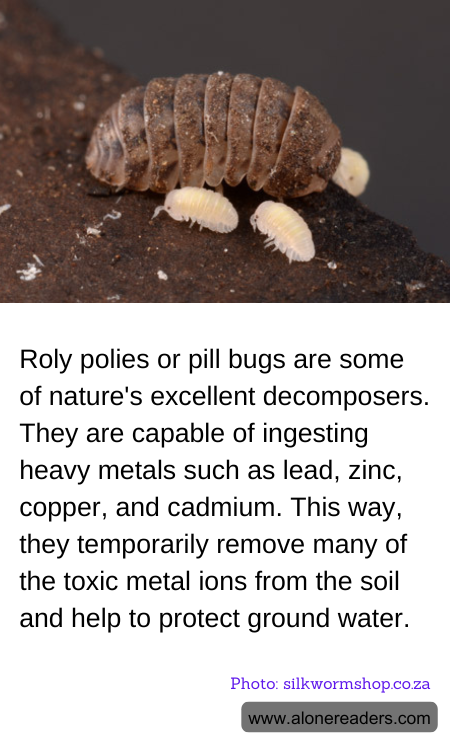
Roly polies, also known as pill bugs, are fascinating creatures not just for their ability to curl into a ball when threatened but for their significant role in the ecosystem as decomposers. Found commonly in moist environments under rocks, logs, or leaf litter, these terrestrial crustaceans are crucial in breaking down organic matter, thus enriching the soil and fostering a healthier ecosystem. However, their environmental benefits extend beyond mere decomposition.
One of the lesser-known yet vital roles of roly polies involves their ability to ingest and detoxify soil from heavy metals. They are capable of consuming harmful substances like lead, zinc, copper, and cadmium. By absorbing these metals, roly polies help to clean the soil, inadvertently preventing these toxic elements from leaching into groundwater or being absorbed by plants. This natural filtration process not only safeguards water quality but also contributes to safer agricultural practices, as crops are less likely to absorb dangerous levels of heavy metals.
Roly polies possess specialized structures in their digestive system that allow them to bind these heavy metals and sequester them in a form that is much less harmful to the environment. Once ingested, these metals are incorporated into the pill bugs' exoskeletons, which are eventually shed as they grow. This bioaccumulation reduces the mobility and bioavailability of the metals, effectively removing them from the ecological cycle until the exoskeletons decompose.
This unique ability positions roly polies as not only key players in nutrient cycling but also as potential agents in bioremediation projects. Bioremediation is an environmental management technique that uses living organisms to remove or neutralize contaminants from a polluted area. Researchers are exploring the possibility of harnessing roly polies' metal-accumulation abilities on a larger scale for cleaning up contaminated soils, especially in industrial areas.
Understanding and supporting the habitat of roly polies can enhance their population dynamics and, in turn, amplify their environmental benefits. Protecting their habitats ensures that these natural decomposers continue to thrive, supporting the delicate balances within ecosystems and extending their invaluable services from leaf litter layers right down to cleaner groundwater systems. In recognizing the humble pill bug's role in our environment, we acknowledge the intricate connections and the essential services that even the smallest creatures provide.
