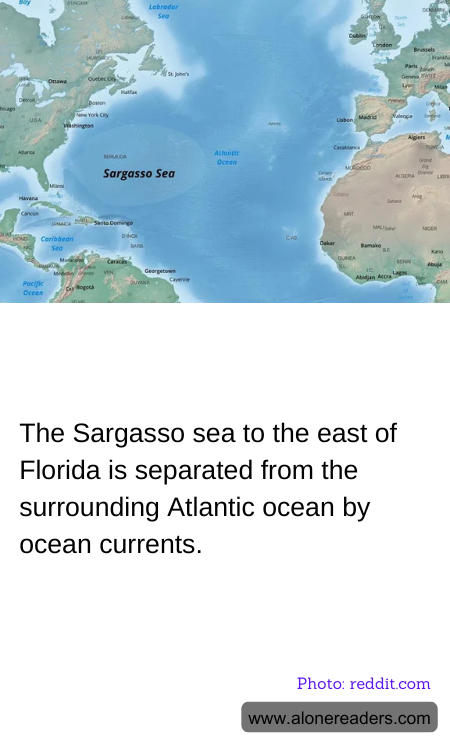
The Sargasso Sea, a unique region of the North Atlantic Ocean, is delineated not by land boundaries but by a system of powerful ocean currents. This body of water, situated to the east of Florida, is encircled by the Gulf Stream to the west, the North Atlantic Current to the north, the Canary Current to the east, and the North Atlantic Equatorial Current to the south. These currents create a circular motion that isolates the Sargasso Sea from the surrounding Atlantic waters, giving it characteristics distinct from other areas of the ocean.
Named after the Sargassum seaweed that prolifically floats on its surface, the Sargasso Sea is the only sea without a land boundary. The seaweed is not merely a feature of the sea but an essential habitat for a variety of marine species. It provides shelter and breeding grounds for endangered eels, as well as habitat for turtles and countless fish species, which in turn support a complex food web. The floating mats of algae are a critical feature, playing a role in the carbon cycle by capturing carbon dioxide.
The Sargasso Sea is also known for its deep blue water and exceptional clarity. This clarity is due primarily to the low nutrient content of the water, which inhibits the growth of phytoplankton, the basis of most marine food chains. This low productivity, however, doesn't reflect a lack of biological importance. The Sargasso Sea plays a crucial role in marine biodiversity, supporting unique and varied ecosystems often described as marine rainforests.
Environmentally, the Sargasso Sea faces threats primarily from plastic pollution and excessive sargassum harvesting. These pressures endanger the fragile habitats it supports, highlighting the need for targeted conservation efforts. The sea's unique status and ecological importance have led to international discussions about its preservation, recognizing it as a significant but vulnerable part of the Atlantic Ocean's ecological landscape.
Understanding and protecting the Sargasso Sea is vital not only for the species that directly depend on its waters but for the broader health of the Atlantic Ocean. Its isolation, governed by the surrounding currents, has allowed it to evolve into an irreplaceable oceanic environment, underscoring the interconnected nature of global marine ecosystems.
