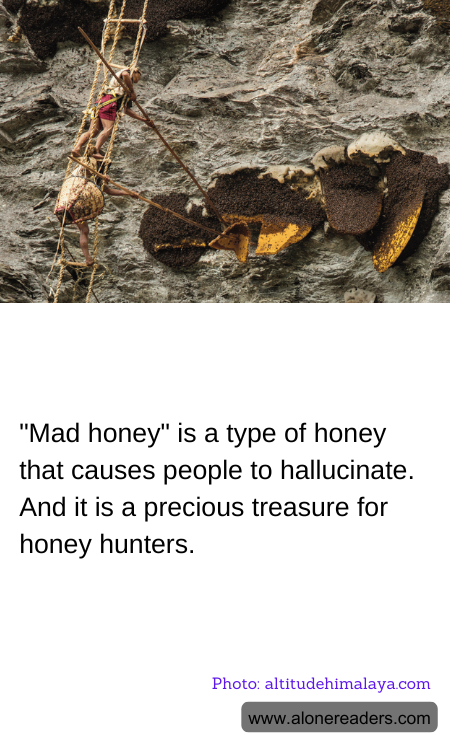
“Mad honey,” famously known for its hallucinogenic properties, is one of the world's rarest and most unique types of honey. It is primarily produced in remote regions of Nepal and Turkey, derived from the nectar of rhododendron flowers, which contain grayanotoxin — a natural compound that impacts the body’s nervous system. The effects can range from mild intoxication and euphoria to intense hallucinations, depending on the dosage.
For honey hunters, obtaining mad honey is a dangerous but worthwhile endeavor. In the steep mountainsides of Nepal, for example, highly skilled Gurung tribesmen face sheer cliffs, bees, and harsh conditions to collect the honey. The tradition, centuries old, involves climbing high on handmade bamboo ladders and hanging from ropes to harvest honeycombs from the nests of the largest honeybee in the world, the Himalayan giant honeybee (Apis dorsata laboriosa).
Historically, mad honey has served several purposes. It has been used as a medicine, taken in small doses to treat hypertension, diabetes, and some disorders of the stomach and skin. In ancient times, armies would leave pots of poisonous mad honey along the path of their enemies, who would consume it and be incapacitated by its potent effects. Meanwhile, in local cultures, mad honey is used during festivities and as a libido enhancer, adding a mystical allure to its reputation.
Despite its intoxicating effects and the risks involved in its collection, mad honey continues to fetch high prices on the local and international markets, making it a valuable source of income for the communities involved in its harvest. Additionally, it has caught the attention of adventurous tourists and extreme food enthusiasts around the world, adding to its mystique and intrigue. Thus, while it remains a niche product, mad honey is a shining example of how culture, nature, and tradition can intertwine, offering a glimpse into less accessible experiences of our world.
