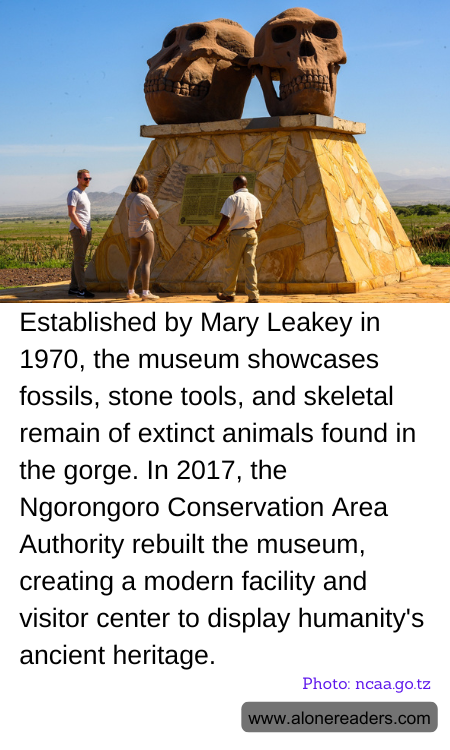
The Olduvai Gorge Museum, initiated by renowned paleoanthropologist Mary Leakey in 1970, stands as a custodian of prehistoric relics, capturing the essence of early human history with its extensive collection of fossils, stone tools, and skeletal remains of extinct animals, all unearthed from the surrounding gorge. This site, deeply etched into the Tanzanian landscape within the Ngorongoro Conservation Area, has been pivotal in understanding human evolution.
Over the decades, the significance of Olduvai Gorge, often referred to as the "Cradle of Mankind," has only grown, prompting further developments to better preserve and interpret its treasures. In a significant upgrade in 2017, the Ngorongoro Conservation Area Authority took decisive steps to enhance the museum's capabilities and visitor experience. The rejuvenation involved constructing a contemporary facility equipped with modern amenities essential for preserving the delicate artifacts and presenting them in a more engaging manner. This new visitor center not only enriches the educational experience but also ensures that the invaluable findings are maintained under optimal conditions.
This museum not only offers insights into the anatomical evolution of humans but also sheds light on the cultural and tool-making advancements that occurred through various epochs, as evidenced by the carefully curated exhibits. The narrative woven through the exhibitions at the Olduvai Gorge Museum not only tells the tale of human ancestry and survival but also stresses the continuity and change within the human lineage. Visitors leave with a deeper appreciation of humanity's shared past, underlining the importance of preserving such heritage sites. The efforts of Mary Leakey and subsequent caretakers of the museum ensure that this pivotal chapter of human history remains accessible to scientists, historians, and tourists alike.
