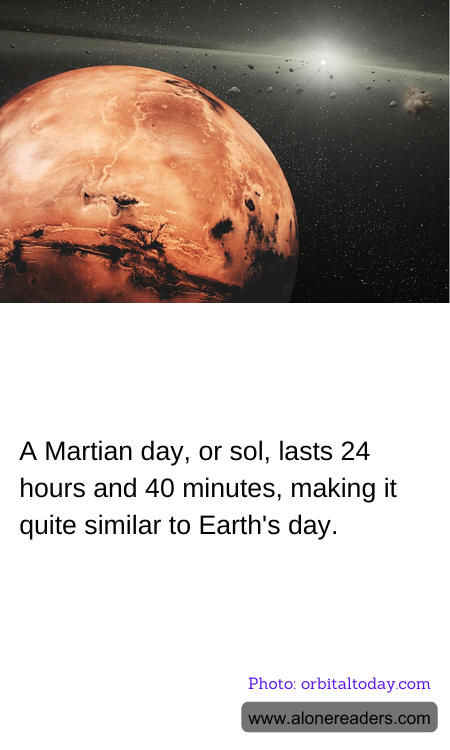
A Martian day, known as a sol, is intriguingly similar yet slightly longer than a day on Earth, lasting approximately 24 hours and 40 minutes. This extra 40 minutes may seem minor, but it presents unique challenges and opportunities for both robots and humans exploring or living on Mars. The similarity in length to an Earth day allows for a somewhat familiar rhythm for activities and rest, which can be psychologically and physically beneficial for astronauts. However, the additional minutes require adaptations in scheduling and timekeeping to stay aligned with Martian cycles.
Due to this time difference, scientists and engineers on Earth must rotate their schedules, if they are coordinating in real-time with missions on Mars, such as rovers or landers. This Earth-Mars time differentiation is managed through the use of Mars clocks that keep track of the Martian sol rather than Earth's 24-hour cycle. For long-term missions on Mars, syncing with the local solar day would be crucial for determining work cycles, habitat operations, and even the planning of outdoor activities to take advantage of daylight.
The concept of a sol becomes even more relevant considering the effects of Mars' rotation on environmental conditions. Just like Earth, Mars experiences seasons, weather changes, and temperature variations throughout a sol, affecting when and how missions operate. For instance, solar-powered machines have their energy availability directly tied to Martian daylight hours; thus, the length of a sol influences their operational planning.
Considering human activities, living on Mars would necessitate recalibration of our circadian rhythms to accommodate the longer day. Studies on Earth indicate that even slight shifts in daily timing can have substantial effects on sleep and health. The adaptation to a Martian sol might involve advanced habitation strategies and possibly even genetic or pharmacological aids to help humans adjust.
Overall, the nearly Earth-like length of a Martian sol offers a convenient platform for exploration and potential colonization but comes with a set of challenges that must be ingeniously managed to make life on Mars feasible. As we continue our advancements in space technology and extraterrestrial life sciences, understanding and adapting to the Martian day will be paramount to the success of interplanetary travel and future settlements.
