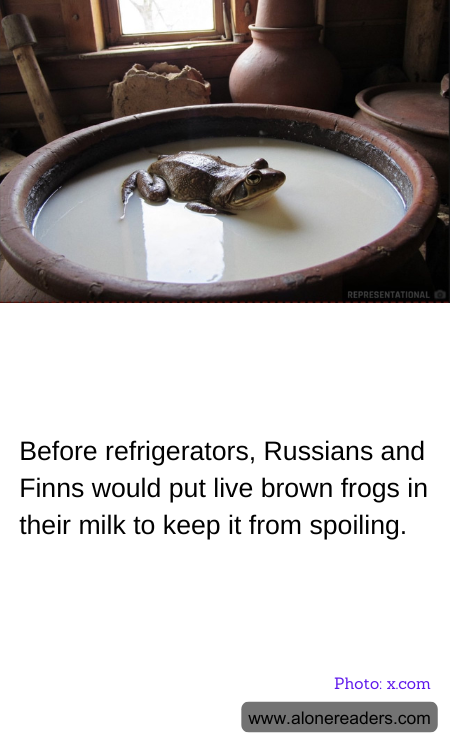
Long before the advent of modern refrigeration, people across the world employed various ingenious methods to preserve their food items. Among these, Russians and Finns developed a particularly intriguing method to keep their milk fresh: they placed live brown frogs into their milk containers. This practice may sound unusual, but it is rooted in an intuitive understanding of natural antibacterial agents.
The brown frog, common in Russia and Finland, secretes substances through its skin that have preservative and antibacterial properties. Research has shown that these secretions can significantly inhibit the growth of bacteria, including Staphylococcus aureus and Salmonella, which are common culprits in causing milk to spoil. The frogs' skin produces a cocktail of peptides that are effective in reducing bacterial growth, thereby extending the milk's freshness.
This method of preservation was especially useful during times when access to refrigeration was limited or nonexistent. It allowed people in rural or remote areas to keep their milk drinkable for a longer period, reducing waste and the frequency of milk collection or production. The practice highlights a symbiotic relationship between humans and their natural environment, where local wildlife was used in a way that was beneficial for both.
Moreover, this traditional method underscores the broader theme of using nature-derived substances in preserving perishables, a practice common to many ancient cultures around the world. In modern times, the principles behind these traditional methods are being revisited for their potential applications in natural food preservation and even in medical contexts, where antibiotic resistance is a growing concern.
In summary, the seemingly odd practice of placing live frogs in milk is a testament to the resourcefulness and observational skills of past generations. It not only provided a practical solution to the challenge of milk preservation but also serves as an early example of using biological resources to manage food safety.
