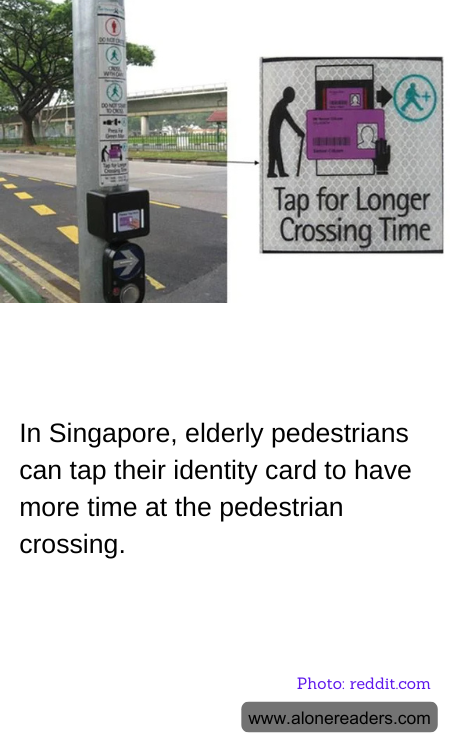
In Singapore, a novel initiative has been implemented to enhance road safety for elderly pedestrians, who often require more time to cross the streets. By simply tapping their identity cards at designated pedestrian crossings, elderly individuals can now activate a longer crossing duration, ensuring they can navigate roads more safely and comfortably. This innovative use of technology not only underscores Singapore's commitment to being a smart nation but also highlights the importance of inclusive city planning.
This system leverages Singapore's existing infrastructure of card readers, which are commonly used in public transport. The same technology has been seamlessly integrated into pedestrian crossings in areas with a higher population of elderly residents. When an elderly pedestrian taps their identity card, the system recognizes their need for additional crossing time based on the data embedded in the card, such as the date of birth. The traffic lights then adjust accordingly, providing extra time.
This approach not only empowers the elderly, giving them greater independence and confidence when moving around the city but also reduces anxiety associated with crossing roads. Furthermore, it minimizes the risk of accidents and injuries among one of the most vulnerable groups of pedestrians. By addressing the specific needs of the aging population, Singapore is setting a precedent that could potentially inspire other cities worldwide to adopt similar people-centric solutions in urban planning.
Moreover, the initiative is part of a broader movement towards enhancing mobility for the elderly within the city. Alongside the extended crossing times, the government has introduced other age-friendly measures such as ramps, non-slip tiles on pavements, and ample seating at bus stops, making everyday travel safer and more accessible for older adults. These changes are crucial in a nation where the elderly population is steadily increasing, signaling a shift towards more sustainable and considerate urban environments.
Incorporating feedback from initial users, the system is under continuous review and adjustment to ensure its efficiency and responsiveness to the actual needs of elderly pedestrians. This ongoing process of feedback and adaptation further underscores the dynamic nature of urban development in catering to a diverse demographic. As cities around the world grapple with aging populations, Singapore’s proactive measures provide a model for integrating technology and thoughtful urban planning to create more inclusive, age-friendly urban ecosystems.
