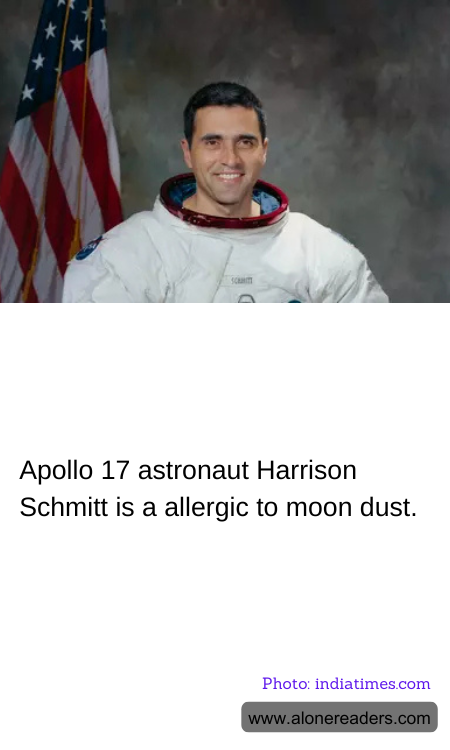
Apollo 17, which launched on December 7, 1972, marked NASA's final Apollo lunar landing mission, often remembered for its extraordinary contributions to scientific knowledge about the Moon. Among the astronauts onboard was Harrison Schmitt, a geologist who became the last of 12 people to date to walk on the Moon. Schmitt's presence on the mission was particularly significant; he was the first and only professional scientist to reach the lunar surface, which proved crucial for the scientific investigations conducted during the mission. However, an unexpected personal challenge arose for Schmitt as he encountered the Moon’s regolith—the fine, powdery dust that covers the lunar surface.
During his activities on the Moon, Schmitt experienced what he described as "lunar hay fever." His symptoms included a sore throat, watery eyes, and sneezing, which were all triggered shortly after exposure to the moon dust that clung to spacesuits and equipment. Upon returning to the lunar module and removing his helmet, Schmitt's reactions became more pronounced, although they fortunately did not impede his ability to carry out his duties. His experience highlighted an intriguing phenomenon—moon dust's potential as an irritant, an issue that NASA might contend with as it plans for future manned missions to the Moon.
The dust on the Moon is not only clingy but also sharp and abrasive, having formed over millions of years without the weathering effects of an atmosphere. Under microscopic examination, these particles resemble tiny shards of glass. For Schmitt and potentially future lunar explorers, this represents a considerable hazard. Following the Apollo missions, further analysis of the moon dust brought back to Earth revealed that the dust carries reactive properties that could indeed irritate human tissue, particularly in the lungs and nasal passages. This poses significant concerns for long-term lunar habitation plans, wherein exposure to the dust could be more prolonged.
Schmitt’s allergic reaction to moon dust is a reminder of the unexpected challenges space exploration might throw at humans, underlining the importance of preparing for a wide array of environmental factors. Future lunar mission designs include strategies to mitigate the effects of moon dust, including advanced sealing mechanisms for habitats and suits, as well as possible airlock systems designed to reduce the amount of dust brought inside living quarters. Understanding and managing such challenges is crucial as we aim for sustainable long-term presence on the Moon and potentially other planets. Schmitt's experience has not only added a curious footnote to the history of lunar exploration but also offers valuable data that can aid in the planning and execution of future missions.
