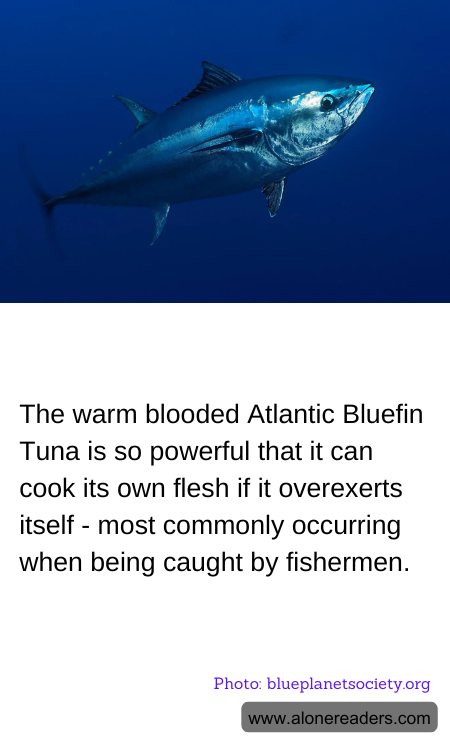
The Atlantic Bluefin Tuna, one of the largest and fastest fish in the ocean, possesses a unique biological feature that sets it apart from most other fish: it is warm-blooded. This distinctive trait allows it to maintain a body temperature that is higher than the surrounding water, providing it with enhanced metabolism and swimming capabilities, which are crucial for both hunting and evading predators. However, this characteristic also comes with a peculiar vulnerability particularly noticeable during periods of intense physical activity, such as when being caught by fishermen.
When the Bluefin Tuna exerts itself excessively, such as when struggling against fishing lines, its powerful muscle activity generates a significant amount of heat. Unlike humans, who sweat to cool down, the tuna's body can struggle to dispel this excess heat due to its insulating layer of fat combined with its warm-blooded nature. This can lead to a condition where the fish essentially begins to cook its own flesh from the inside out, a phenomenon known as "burnt tuna syndrome." The overheating can cause the proteins within the muscle to denature, similar to how meat changes structure when it's cooked, leading to a loss in both flavor and texture. This not only impacts the quality of the fish for commercial uses but can also be detrimental to the tuna's health if it were to somehow escape after being caught.
Fishermen who target this valuable species are well aware of this issue and often use specific techniques to reduce stress and fight time when capturing bluefin tuna to maintain the quality of the fish. Rapid retrieval techniques are practiced to avoid prolonged struggles that might lead to overheating. Despite these efforts, the bluefin tuna's unique physiology remains both a remarkable natural adaptation and a challenge for sustainable fishing practices.
Furthermore, the plight of the bluefin tuna extends beyond its physiological responses. The species faces significant threats from overfishing and illegal fishing practices, fueled by high market demand, particularly for sushi and sashimi. This has led to critical reductions in populations in some areas, prompting international efforts to manage and conserve this iconic species. Conservation measures include strict quotas and seasonal closures that aim to protect the bluefin tuna and ensure its presence in the ocean's ecosystem for generations to come. Thus, understanding the complex nature of the Atlantic bluefin tuna is essential not only for the culinary industry but also for the broader context of marine conservation and sustainable fishing practices.
