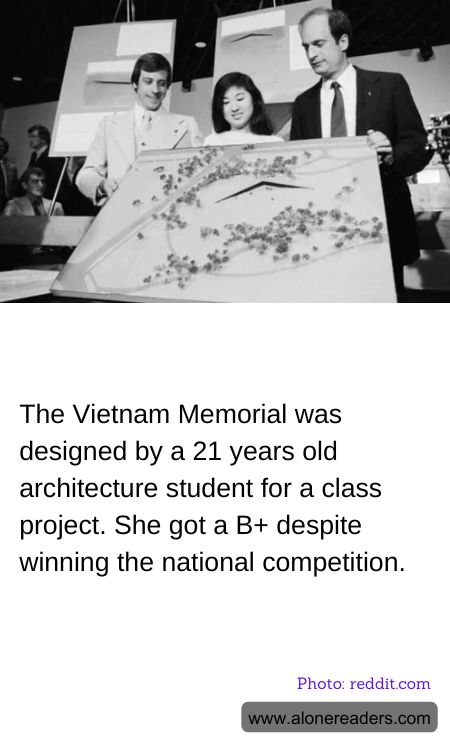
The Vietnam Memorial stands as a poignant symbol of America's reflection on war and loss, yet not everyone knows that its design originated from an unexpected source—a young architecture student named Maya Lin. At just 21 years old, Lin entered a national competition to design the Vietnam Veterans Memorial as part of a class project at Yale University. Despite her relative inexperience, Lin's concept was selected from over 1,400 submissions, a testament to the power and clarity of her vision.
Maya Lin's design is striking in its simplicity and emotional impact. The memorial consists of a black granite V-shaped wall inscribed with the names of over 58,000 servicemen and women who died in or were missing in action during the Vietnam War. The names are listed in chronological order of their dates of casualty, bringing the reality of the war into acute perception as visitors walk alongside the wall, allowing for a personal connection with the fallen.
However, the path to realizing her vision was not without hurdles. Controversy surrounded the design's stark departure from traditional triumphal military monuments. Critics argued that its austere minimalism was more reflective of shame than honor. Nonetheless, the memorial has since been embraced widely, becoming one of the most visited sites in Washington, D.C., known for its contemplative and somber atmosphere which allows individuals a space for private reflection and healing.
Interestingly, Lin's original submission for the memorial design earned a B+ in her class. The grade starkly contrasts with the national and historical recognition the memorial has achieved, reminding us that academic evaluation and real-world impact do not always align. Lin’s work on the Vietnam Memorial paved the way for a distinguished career in architecture and design, focused often on themes of environment and memory. Her originality in the Vietnam Memorial’s design redefined the concept of a war memorial. Far from grand edifices or heroic statues, Lin chose subtlety and interaction, inviting emotional engagement and personal reconciliation.
The story of the Vietnam Memorial's inception is a powerful reminder of the potency of youthful vision and the impact of architecture on collective memory and public mourning. It challenges established norms not only in design but also in how nations remember their history and honor their heroes.
