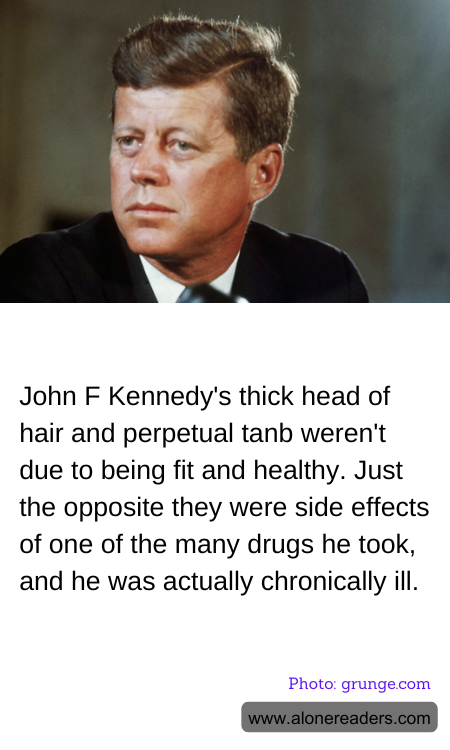
John F. Kennedy, the 35th President of the United States, is often remembered for his youthful vigor and charismatic presence, hallmarks that were, in part, products of an extensive personal struggle with chronic illness that was largely hidden from the public eye. Contrary to his robust public image, Kennedy was perpetually battling a complex array of medical issues that included severe back pain and Addison's disease, an endocrine disorder that impairs the adrenal glands.
Kennedy's thick, lustrous head of hair and sun-kissed skin, characteristics that helped forge his image as the epitome of vitality, were ironically side effects of the treatments for his ailments, particularly his use of corticosteroids. These medications were prescribed to manage his Addison's disease but came with cosmetic side effects like hyperpigmentation and enhanced hair growth. His tanned appearance was also not solely the result of sun exposure but was accentuated by the bronze hue that corticosteroids can impart to the skin.
The extent of Kennedy's health issues wasn't publicly acknowledged during his presidency, in part due to concerns about how his fitness for office might be perceived. Behind the scenes, however, he was often in considerable pain and underwent numerous medical treatments, including clandestine surgeries, to manage his conditions while trying to maintain the demanding schedule of a U.S. President.
This dissonance between his public image and private reality raises interesting questions about the expectations of health and strength we have for public leaders, and how they contrast with the humanity that underlies every political facade. Kennedy's battle with chronic illness didn’t detract from his capabilities as a leader but emphasized the resilience it took to manage state affairs under great physical duress. His presidency, thus, serves as a compelling study of the complex interplay between public image and private health struggles in the high-stakes arena of American politics.
