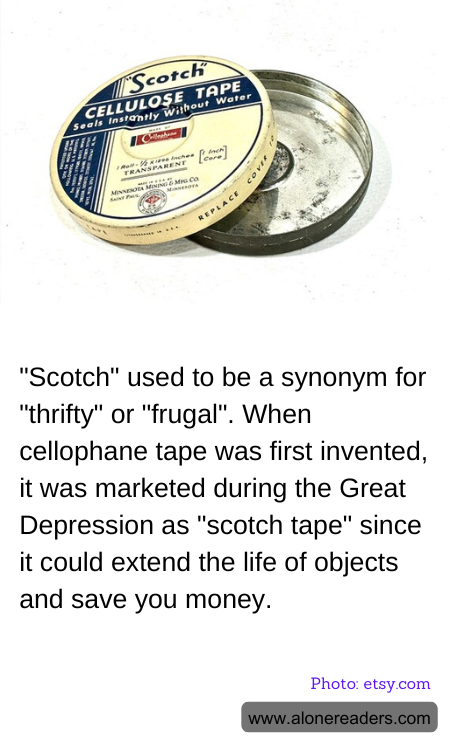
The term "Scotch" in the context of frugality has a fascinating history, particularly when related to the popular office and household item: Scotch tape. The brand name itself stems from a nickname that played on a national stereotype in the 1920s and 1930s, when thriftiness was both a necessity and a virtue. During the Great Depression, conserving resources and extending the usability of everyday objects was crucial.
Scotch tape, invented by Richard Drew, a 3M engineer, was initially brought to market in the early 1930s. The term "Scotch" was used in its branding after a testing incident where an automobile painter remarked that the sample of masking tape was stingily coated with adhesive just like the “Scotch” people, implying penny-pinching or frugality. Thus, the product was mockingly branded as "Scotch" tape, playing on the stereotype of Scots being economical.
This label turned out to be a marketing success story. The tape’s ability to provide a temporary fix for torn or broken items made it a household essential, embodying the very essence of thriftiness it was named for. By allowing consumers to mend rather than replace goods, Scotch tape adhered itself into the fabric of everyday life – symbolic of smart, economic repairs during financially strained times.
Today, the connotations of thriftiness in the term “Scotch” might have faded, but the brand itself remains a testament to the legacy of frugality and innovation it was born from. Scotch tape continues to be a ubiquitous presence in homes and offices around the world, used for sealing, mending, and crafting, constantly reminding us of a time when making do and mending was not just necessary, but a way of life.
