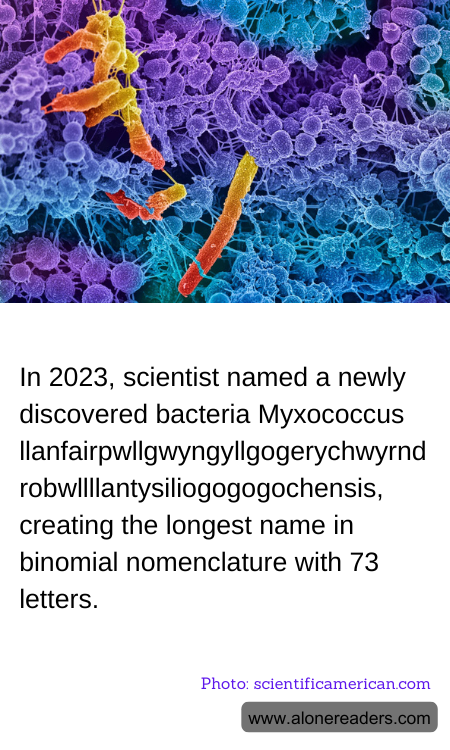
In a striking revelation this year, scientists announced the discovery of a new bacteria species with a name as intricate as its genetic makeup. Dubbed Myxococcus llanfairpwllgwyngyllgogerychwyrndrobwllllantysiliogogogochensis, this name now holds the record for the longest in the history of binomial nomenclature, consisting of 73 letters. This newly identified bacterium was found in soil samples taken from the region near the Welsh town with the famously long name, Llanfairpwllgwyngyll. The choice to name the bacterium after this town not only reflects its place of discovery but also highlights the often playful nature of scientific nomenclature.
The Myxococcus genus to which this bacteria belongs is known for its complex social behavior and ability to degrade cellulose, traits that piqued the interest of researchers looking for environmentally friendly solutions to waste management. The name, though a mouthful, encapsulates a nod to microbial diversity and the specific ecological niches organisms inhabit. Scientists involved in the discovery hope that the name draws attention not only to the novelty of the bacterium but also raises public interest and awareness about the role of microorganisms in our ecosystems and the science of microbiology.
Naming aside, the study and cataloging of such bacteria are critical as they can have profound implications for fields ranging from biotechnology to ecology. This discovery adds to the rich tapestry of the microbial world and offers new avenues for research and potential applications in environmental cleanup strategies. It’s a testament to how even the smallest organisms can have substantial impacts on scientific understanding and practical applications in human society.
