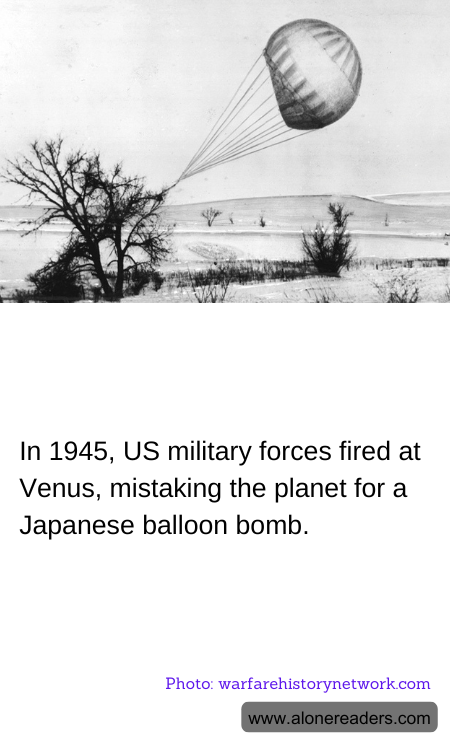
In 1945, during the uncertainties of World War II, a curious incident involving the US military forces illustrates the intense paranoia and high-alert status of the time. As the United States was heavily engaged in both the European and Pacific Theatres, the homeland's defense systems were on edge for any potential threats, including those from the sky.
One night, the forces detected what they believed to be a hostile object flying in the skies. Suspecting it to be a Japanese balloon bomb—a type of weapon Japan had indeed been sending across the Pacific—the military responded with the seriousness such a threat warranted. These balloon bombs were designed to float across the ocean and drop explosives on American soil, a tactic that created an atmosphere of fear and vigilance in the U.S.
However, in this particular instance, the "enemy" was nothing of the sort. The military personnel involved had actually trained their sights on Venus, the second planet from the sun, which was particularly bright in the sky at that time. This mistake led to the unnecessary firing at what was merely a celestial body.
This misidentification speaks volumes about the tense environment of wartime America, where the pressure to protect the nation could lead to such errors. It also highlights the challenges of tracking and correctly identifying airborne objects with the technology available at the time. The story serves as a sobering reminder of the fog of war and the real human fears and errors it can engender. Such incidents underscore the importance of improving detection and response technologies and strategies, to distinguish between false alarms and real threats effectively.
