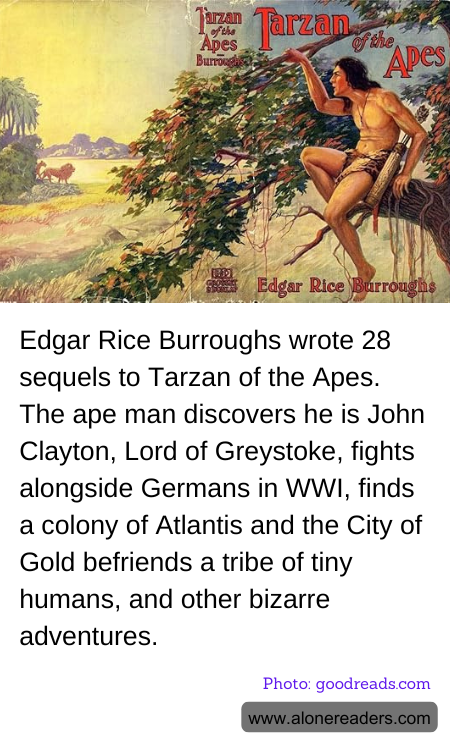
Edgar Rice Burroughs, best known for his creation of the jungle hero Tarzan, crafted an expansive series that extended well beyond the initial success of "Tarzan of the Apes." With 28 sequels, Burroughs transformed his character from a mere wild man into a figure of global adventure and fantastical exploits. Throughout these stories, Tarzan, revealed to be John Clayton, Lord Greystoke, finds himself not just swinging through the jungles but also embroiled in the events of World War I, battling alongside Germans and navigating the complexities of his dual identity.
The sequels introduced readers to even more extravagant scenarios as Tarzan ventured beyond familiar jungles. He discovers lost civilizations like a surviving colony of Atlantis and Opar, the City of Gold, which added a mythical and legendary scale to his adventures. In these lost cities, Burroughs intertwined elements of the mythical with the modern struggles of his protagonist, creating layers of narrative that elevated the series beyond its pulp fiction roots.
Furthermore, Burroughs wasn't afraid to delve into the bizarre, introducing a tribe of tiny humans in one of his many tales, showcasing his penchant for exploring themes of civilization versus savagery, human evolution, and cultural diversity—all seen through the lens of Tarzan's extraordinary experiences. The tiny humans, like many of the characters Tarzan meets, are both a reflection of Burroughs' inventiveness and a commentary on the human condition.
Burroughs' Tarzan series thus stands out not only for its adventurous tales but also for its exploration of such a wide range of ideas, from colonialism and environmentalism to racism and noble savagery. Each sequel, while providing the thrills typical of the adventure genre, also layered new facets on the Tarzan mythos, contributing to the character’s longevity and continued popularity. Through it all, Tarzan remains a symbol of untamed wilderness confronting the encroaching modern world, a theme that still resonates with readers today.
