More About This Card
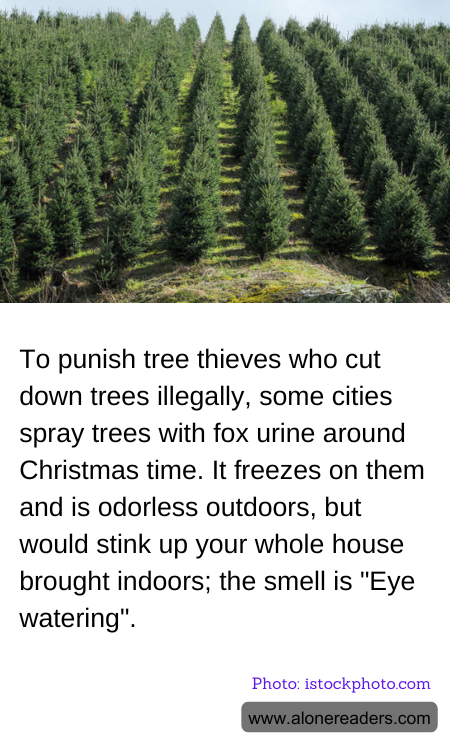
In an innovative effort to combat the seasonal issue of illegal tree cutting, some cities have adopted a unique, albeit slightly unusual, method: spraying trees with fox urine. This approach targets the Christmas period, a peak time for such thefts, when the demand for traditional holiday trees skyrockets. The strategy leverages the natural properties of fox urine, which, when sprayed on trees, freezes and remains odorless in the cold outdoor environment. However, once these trees are moved indoors, where temperatures are warmer, the urine thaws, releasing a powerful and overwhelming stench that has been described as "eye-watering."
The use of fox urine serves as a deterrent, aiming to dissuade potential thieves from taking the trees in the first place. The logic is simple: while the trees might appear normal and scent-free in the brisk outdoor air, their true malodorous nature will only reveal itself once they are inside, leaving the thief with a noxious problem far greater than they anticipated. This not only punishes the wrongdoer directly but also serves as a cautionary tale to others who might consider stealing trees.
The method has stirred various reactions among communities. Some residents applaud the creativity and effectiveness of the approach, appreciating the non-lethal and naturally sourced deterrent. Meanwhile, others express concerns about the potential for unintended consequences, such as affecting people who are unknowingly gifted these trees or the logistics of handling and applying a substance like fox urine.
Despite these concerns, the use of such bio-based deterrents highlights a broader trend in urban management where cities are increasingly turning to innovative, environmentally-friendly solutions to address public issues. The fox urine tactic is not only a testament to the ingenuity of city officials but also a reflection of the growing need for sustainable practices in urban governance. While undoubtedly unorthodox, this method underlines a serious commitment to preserving vital green spaces and urban tree cover, crucial for city aesthetics, air quality, and overall environmental health. As cities continue to innovate, such methods may become a cornerstone in the larger tapestry of urban environmental management.