More About This Card
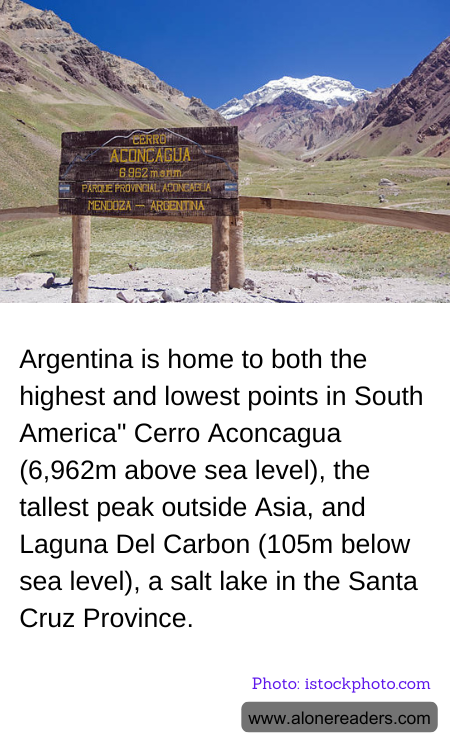
Argentina, a country renowned for its diverse landscapes and natural extremes, hosts both the highest and lowest points in South America, showcasing the dramatic geographical contrasts within its borders. Cerro Aconcagua, standing at an impressive 6,962 meters above sea level, is not only the tallest mountain in South America but also the highest peak outside of Asia. This colossal mountain, part of the Andes mountain range, is a magnet for climbers around the world and represents a formidable challenge even for the most experienced mountaineers due to its extreme altitude and severe weather conditions.
In stark contrast, located in the Santa Cruz province, is the Laguna del Carbón, which sits 105 meters below sea level. This salt lake holds the title as the lowest geographical point in the Western Hemisphere. It is part of the Gran Bajo de San Julián, a large depression that features barren, windswept landscapes quite unlike the imposing heights of Aconcagua. The lake's below-sea-level characteristic contributes to its unique ecological environment, affecting its salinity and the types of species that can thrive in and around it.
These two extremes of elevation within one country illustrate the remarkable geographical diversity of Argentina, spanning from towering mountain peaks that pierce the clouds to expansive lowlands that dip below the ocean’s surface. This range not only shapes the country’s natural beauty but also influences the climate, biodiversity, and agricultural conditions that define life in Argentina. The presence of both Cerro Aconcagua and Laguna Del Carbon highlights how natural features can encapsulate the essence of a region's environmental identity, serving as physical reminders of the dynamic processes that shape our planet.