More About This Card
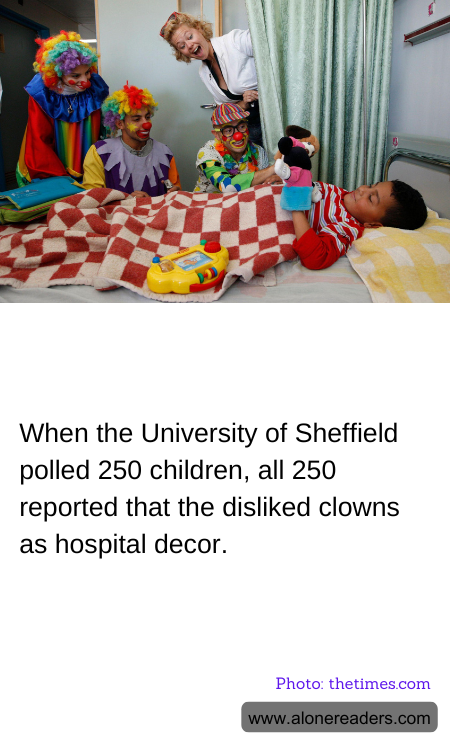
In recent surveys conducted by the University of Sheffield, an unexpected consensus emerged among young participants regarding hospital decor. The study, involving a sample of 250 children, revealed a unanimous disapproval for clowns being used as decoration in hospital settings. This finding is particularly significant as it challenges the long-held assumption that clowns, typically associated with joy and entertainment in circuses and parties, would create a comforting atmosphere in pediatric hospital wards.
The aversion to clowns among children could be attributed to the phenomenon known as "coulrophobia," or fear of clowns, which is not uncommon in children and even adults. The exaggerated features and unpredictable behavior of clowns, intended to amuse, can instead evoke anxiety and fear in young patients who are already in a vulnerable state due to illness and the unfamiliar hospital environment.
The results from the University of Sheffield highlight the importance of considering patients' perceptions and emotional well-being in healthcare settings. The design elements within hospitals, especially those aimed at children, need to be carefully chosen to ensure they contribute positively to the healing environment. This study may prompt hospital administrators and designers to reconsider the use of clowns as decor and perhaps move towards more universally soothing and cheerful elements that help rather than hinder the recovery process for children.
Ultimately, this revelation serves as a reminder of the shift required in how we design patient care environments, especially for children. By prioritizing the preferences and psychological comfort of young patients, healthcare providers can create spaces that not only heal but also comfort. This study certainly advocates for more child-centric and evidence-based approaches in choosing decor that supports rather than scares.