More About This Card
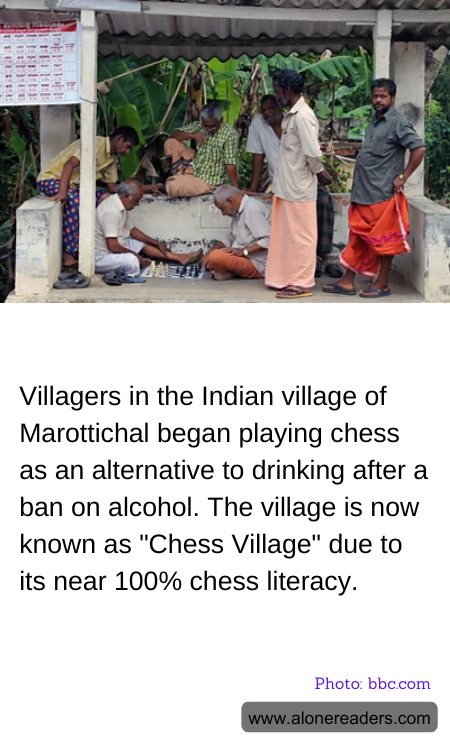
In the picturesque village of Marottichal, located in the state of Kerala, India, chess is not just a game but a way of life. This transformation began in the 1970s after the local government imposed a ban on alcohol. The ban was an attempt to curb the rampant alcoholism that was affecting the health and welfare of the village community. The unintended consequence of this prohibition, however, was that it left many of the villagers, particularly the men, with a lot of idle time and few outlets for entertainment.
C. Unnikrishnan, a local who realized the destructive potential of this idle time, decided to introduce the ancient game of chess to the villagers. His idea was simple yet revolutionary: replace alcohol consumption with chess playing. What started as a small initiative soon grew in popularity, and as more people began playing chess, the village saw a remarkable decline in alcohol-related issues and an increase in social interaction among its residents.
Over the years, this pastime turned into a passion, with nearly every household in Marottichal engaging in chess. Today, the village boasts almost 100% chess literacy, a term that signifies nearly every villager knows how to play chess. Remarkably, Marottichal has produced notable players who have competed in district and state-level tournaments, with a few shining in national arenas as well.
The impact of chess in Marottichal extends beyond merely being an alternative to drinking. It has fostered a sense of community, sharpened cognitive skills, and provided a constructive pastime for both the young and old. The game is so ingrained in the fabric of the village that it is not uncommon to see groups of people, from young children to elderly men, gathered around chessboards at almost any given time of the day. Schools in Marottichal have incorporated chess into their curriculum, and there are regular tournaments that stimulate a healthy competitive spirit within the community.
Marottichal's story is an inspiring example of how a simple change can alter the social structure of a community. From a place struggling with the social ills related to alcohol abuse, it has transformed into a model village, earning the nickname "Chess Village". The initiative has not only improved the lives of the villagers but also positioned Marottichal as a unique sociocultural phenomenon, attracting attention from researchers and media worldwide interested in the ways traditional games like chess can influence social behavior and community health.