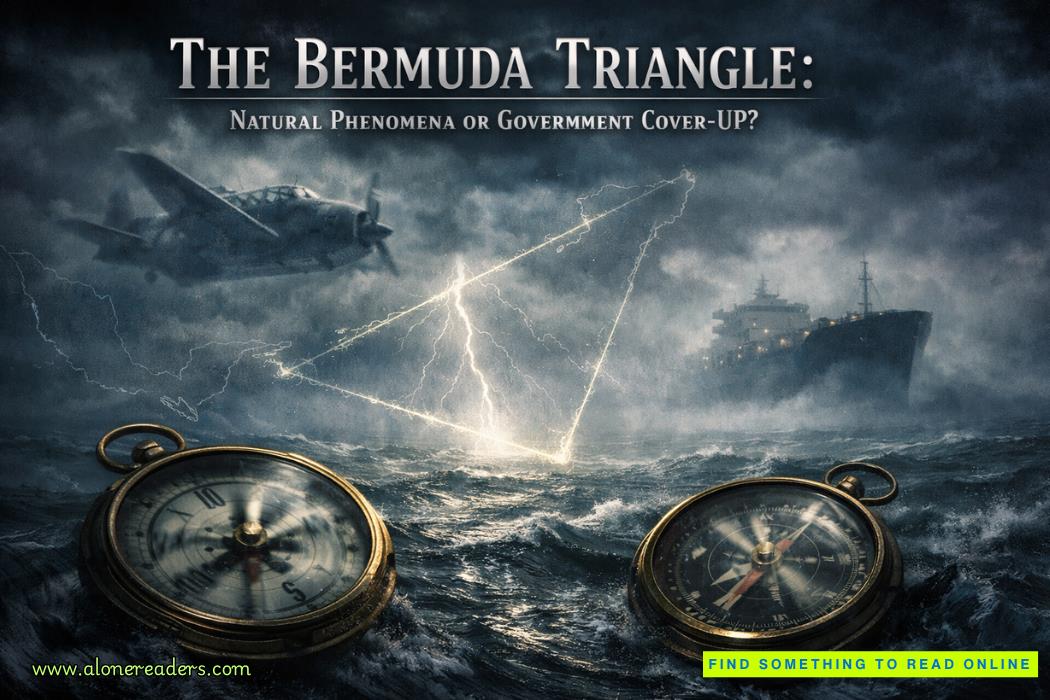
The Bermuda Triangle occupies a unique space in modern historical imagination, suspended somewhere between documented maritime hazards and the darker corners of conspiracy culture. Stretching roughly between Miami, Bermuda, and Puerto Rico, this region of the western Atlantic has long been associated with ships and aircraft that allegedly vanished without explanation. What distinguishes the Bermuda Triangle from other dangerous sea routes is not simply the number of accidents reported there, but the narrative that grew around those incidents—one that blends navigational mystery, Cold War secrecy, and a persistent suspicion that governments know more than they are willing to reveal.
Interest in the region surged during the mid-twentieth century, a period defined by rapid advances in aviation, submarine warfare, and meteorology. Before that, the Atlantic had always been perilous, but losses were generally attributed to storms, poor charts, or human error. The Triangle changed this perception. Reports began to emphasize anomalies rather than accidents: compasses that spun wildly, radios that failed without warning, and vessels that disappeared in calm seas. These accounts transformed routine maritime risks into something more unsettling, encouraging speculation that the region itself possessed unusual properties.
One of the most cited incidents is Flight 19, a 1945 U.S. Navy training exercise in which five aircraft vanished during a routine navigation drill. According to official records, the flight leader became disoriented after misreading his instruments, believing he was over the Florida Keys when he was actually east of the mainland. Conflicting instructions, worsening weather, and dwindling fuel led to disaster. Yet the popular retelling emphasized something far stranger: synchronized compass failures, calm radio voices fading into nothing, and a sudden disappearance over open water. The fact that a rescue plane was also lost only deepened public unease and gave the impression of a region that consumed machines.
Supporters of natural explanations argue that the Triangle’s reputation rests on a misunderstanding of geography and probability. The area sits along one of the most heavily traveled maritime and aviation corridors in the world. When traffic density is considered, the number of accidents does not significantly exceed global averages. What does exceed the norm is environmental complexity. The region is shaped by the powerful Gulf Stream, which can carry wreckage hundreds of kilometers in a matter of days, effectively erasing physical evidence. Tropical storms form rapidly here, sometimes without the long buildup seen in other oceans, catching even experienced crews off guard.
Weather alone, however, does not explain all reported phenomena. Advocates of scientific mystery point to geomagnetic irregularities. While the idea that compasses malfunction wildly in the Triangle is often exaggerated, it is true that the region lies near zones where magnetic north and true north briefly align. For poorly trained navigators, especially in the early twentieth century, this alignment could produce subtle but fatal errors. Over long distances, a few degrees of miscalculation can mean missing land entirely. In an era before GPS and satellite tracking, such mistakes were rarely recoverable.
Another frequently cited natural hypothesis involves methane hydrate releases from the ocean floor. Large deposits of frozen methane exist beneath the Atlantic seabed, and under certain conditions they can destabilize, releasing massive gas bubbles. In theory, such eruptions could reduce water density enough to cause ships to lose buoyancy and sink rapidly. While laboratory models support this possibility, there is no conclusive evidence linking a hydrate release to any documented Bermuda Triangle disappearance. Still, the concept persists because it offers a dramatic, invisible mechanism that aligns neatly with sudden loss narratives.
Where science leaves gaps, conspiracy theories flourish. By the late 1960s and 1970s, writers and broadcasters began framing the Bermuda Triangle not as a navigational challenge but as a suppressed truth. Some claimed that governments deliberately classified incidents to hide experimental technologies gone wrong. Others suggested that the region was used for secret weapons testing, including electromagnetic devices capable of disabling engines or scrambling instruments. The Cold War context made such ideas plausible to a public already aware of covert nuclear tests and black-budget programs.
More elaborate theories propose that the Triangle conceals advanced technology, either ancient or extraterrestrial. The most enduring of these connects the region to the lost civilization of Atlantis, imagined as a technologically superior society whose remnants still interfere with modern machinery. In this narrative, submerged crystals or energy sources disrupt navigation and communication. While archaeologists dismiss Atlantis as a philosophical myth rather than a historical location, the theory endures because it reframes disappearances as encounters with a forgotten power rather than random misfortune.
Alien involvement forms another strand of speculation. Reports of unusual lights over the ocean, time distortions, and missing hours in survivor testimonies are sometimes interpreted as evidence of abduction or surveillance. From this perspective, the Triangle is not dangerous in itself but functions as a monitoring zone or gateway. Governments, according to this view, conceal the truth to avoid public panic or to protect secret agreements. Such claims lack empirical support, yet they persist because they resonate with broader distrust of official narratives.
Government secrecy is, undeniably, a real phenomenon. Military exercises, classified research, and intelligence operations have occurred throughout the Atlantic for decades. The presence of secrecy, however, does not automatically validate extraordinary claims. Many official reports on Bermuda Triangle incidents have been declassified over time, and they consistently point to human error, weather, or mechanical failure. The perception of a cover-up often arises not from missing data, but from the complexity and ambiguity of maritime investigations, where definitive answers are rare.
Media portrayal has played a decisive role in shaping the Triangle’s reputation. Sensational books and documentaries often present unverified anecdotes alongside genuine incidents, blurring the line between fact and fiction. Disappearances from entirely different regions are sometimes retroactively assigned to the Triangle to strengthen the myth. Over time, repetition lends credibility. What begins as speculation hardens into assumed truth, especially when counter-evidence is technical, probabilistic, or simply less compelling than mystery.
Modern navigation technology has quietly undermined the legend. Satellite tracking, real-time weather modeling, and automated distress signals have drastically reduced unexplained losses. Commercial airlines and shipping companies pass through the region daily without incident. If the Bermuda Triangle possessed an inherent, ongoing anomaly, it would likely manifest even under these conditions. Instead, incidents have declined in proportion to improvements in safety and situational awareness, suggesting that earlier losses were products of their time rather than of an enduring phenomenon.
Yet the question persists: why does the Bermuda Triangle continue to fascinate? The answer lies less in the ocean and more in human psychology. The Triangle sits at the intersection of fear and curiosity, offering a canvas onto which anxieties about technology, authority, and the unknown can be projected. It allows for a world in which not everything is mapped or controlled, where forces beyond comprehension still operate. In an age dominated by data and surveillance, that uncertainty is strangely comforting.
Seen through a historical lens, the Bermuda Triangle is best understood not as a single mystery, but as a layered narrative. At its core are real accidents in a challenging environment. Around that core are misunderstandings, exaggerations, and cultural storytelling. Beyond that lies conspiracy—less a claim about hidden truths than an expression of mistrust and wonder. Whether framed as natural phenomena or government cover-up, the Triangle reveals how societies construct meaning around loss, danger, and the limits of knowledge.
In the end, the Bermuda Triangle does not demand belief in the supernatural to remain compelling. Its true power lies in its ambiguity. It reminds us that history is not only a record of events, but also of interpretations. The ships and planes that vanished there are real, their fates tragic. The myths that followed are equally real, shaping popular culture for generations. Between science and suspicion, the Bermuda Triangle endures—not as proof of hidden forces, but as a testament to humanity’s enduring fascination with the unknown.



 The Hundred Days Offensive: How the Allies Defeated Germany in World War I
 The Second Battle of the Marne: The Turning Point of World War I in 1918
 The Spring Offensive of 1918: Germany's Final Gamble to Win World War I
 The Treaty of Brest-Litovsk: How Russia Left World War I
 The Russian Revolution and World War I: How War Brought Down the Tsar
 The Zimmermann Telegram Explained: Germany's Secret Offer to Mexico in World War I










