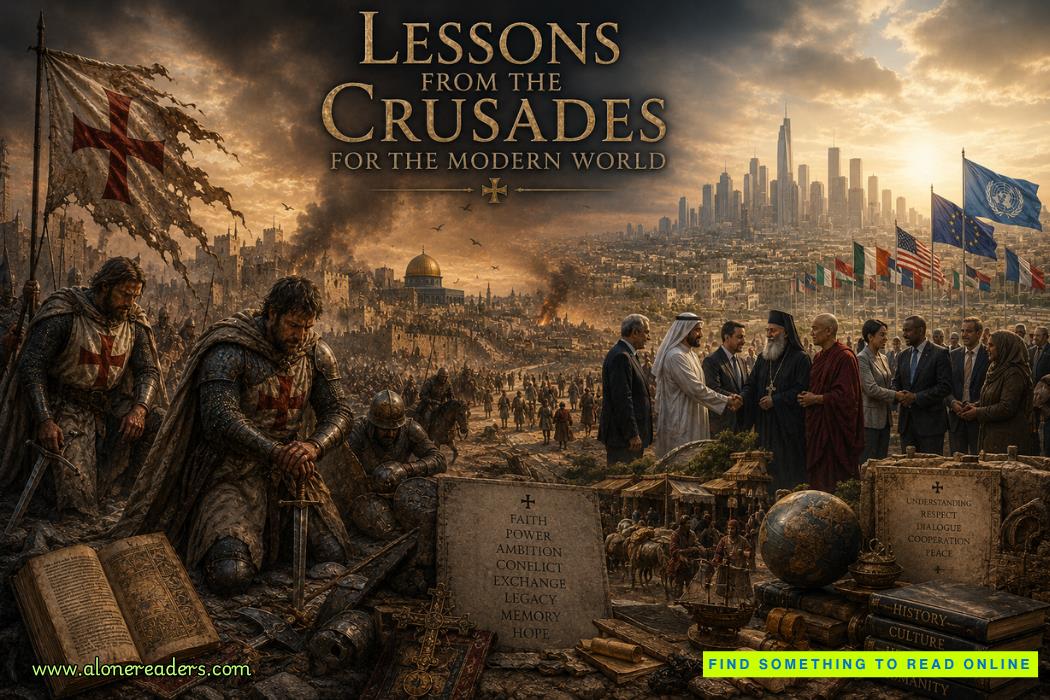
The Crusades remain among the most misunderstood and emotionally charged events in world history. For nearly two centuries, from the late eleventh century to the late thirteenth century, a series of military campaigns connected Europe and the Middle East in ways that permanently transformed politics, religion, economics, and human civilization itself. While popular imagination often reduces the Crusades to simple religious wars between Christians and Muslims, the reality was far more complicated. The Crusades involved political ambition, economic interests, dynastic struggles, cultural exchange, propaganda, religious devotion, personal greed, and deep fear of outsiders. Understanding the Crusades today is not merely an exercise in studying medieval warfare. The Crusades provide powerful lessons about human behavior, ideological conflict, leadership, extremism, diplomacy, and coexistence that remain deeply relevant in the modern world.
The First Crusade began in 1095 after Pope Urban II called upon European Christians to reclaim Jerusalem from Muslim control. His speech at the Council of Clermont ignited enormous religious enthusiasm across Europe. Thousands of knights, peasants, nobles, and adventurers marched eastward believing they were participating in a sacred mission blessed by God. Many were promised spiritual rewards, including remission of sins. Others sought wealth, land, prestige, or escape from poverty and violence at home. One of the first lessons from the Crusades is how powerful emotional narratives can mobilize entire populations. Leaders who frame conflicts as sacred, moral, or existential can inspire extraordinary commitment from ordinary people.
Modern societies continue to experience this phenomenon. Political and ideological movements often rely on emotionally charged language that divides the world into absolute categories of good and evil. During the Crusades, propaganda portrayed enemies not as human beings with complex societies but as threats to divine order itself. This simplified worldview made violence easier to justify. The same pattern appears in modern extremist movements, nationalist conflicts, and ideological wars. The Crusades demonstrate the dangers of dehumanizing opponents and reducing complex geopolitical struggles into moral absolutes.
Another major lesson concerns the relationship between religion and political power. Although religion was central to the Crusades, political ambition frequently shaped decisions behind the scenes. European nobles competed for territory and influence in the eastern Mediterranean. Byzantine emperors attempted to use Western armies for their own strategic goals. Muslim rulers themselves were often divided by rivalries, alliances, and internal power struggles. Even within the Christian world, disputes between kings, nobles, and church authorities constantly influenced Crusader strategy. The Crusades reveal that wars justified through religion are often deeply connected to political and economic interests.
This lesson remains critically important today. Modern conflicts are frequently described as religious or cultural clashes, yet underlying causes often include control over territory, resources, trade routes, strategic influence, or political legitimacy. Simplistic explanations can obscure the true nature of conflicts and make peaceful solutions harder to achieve. The Crusades teach historians and policymakers alike to examine the deeper structures beneath ideological rhetoric.
The Crusades also illustrate the devastating consequences of fanaticism. Some Crusaders believed they were carrying out divine will regardless of the human cost. During the capture of Jerusalem in 1099, large numbers of Muslims and Jews were massacred. Chroniclers described streets filled with blood as Crusaders celebrated victory. Similar atrocities occurred elsewhere throughout the Crusading era. At the same time, retaliatory violence and brutal warfare were also carried out by various Muslim forces during different campaigns. The Crusades reveal how religious certainty can become dangerous when it removes moral restraint and transforms violence into a perceived sacred duty.
Modern history repeatedly confirms this lesson. Extremist ideologies, whether religious or secular, become most dangerous when followers believe they possess unquestionable truth. The Crusades demonstrate how absolute certainty can erode empathy, justify atrocities, and prolong cycles of revenge across generations. They also show how collective trauma can shape cultural memory for centuries. In many parts of the Middle East, memories of the Crusades survived long after the medieval period ended, influencing perceptions of Western intervention and foreign invasion even in modern times.
Yet the Crusades were not solely defined by violence. Another important lesson is that prolonged contact between civilizations often produces cultural exchange even during periods of conflict. Crusaders encountered advanced Islamic societies with sophisticated knowledge in medicine, mathematics, astronomy, architecture, philosophy, agriculture, and trade. Europeans returning from the East brought back ideas, technologies, luxury goods, and intellectual influences that contributed to later developments in Europe.
The Islamic world during the Crusading period possessed major centers of learning such as Baghdad, Damascus, and Cairo. Muslim scholars preserved and expanded knowledge from ancient Greece, Persia, and India. Through interaction with the Islamic world, Europeans gained access to important scientific and philosophical works that eventually influenced the Renaissance. Trade networks expanded dramatically. Spices, textiles, glassware, engineering techniques, and navigation knowledge moved between regions. The Crusades demonstrate that even hostile civilizations can unintentionally enrich one another through contact.
This lesson remains highly relevant in the modern era of globalization. Human societies benefit enormously from cultural exchange, immigration, scientific cooperation, and international trade. Fear of outsiders often ignores the reality that civilizations historically grow stronger through interaction rather than isolation. The Crusades reveal that cultural exchange can occur even under hostile conditions, but peaceful cooperation produces far greater benefits.
The Crusades also expose the dangers of poor leadership and fragmented alliances. Crusader states established in the Middle East frequently suffered from internal rivalries, weak coordination, and personal ambition among leaders. European kings and nobles often prioritized their own interests above long-term stability. Muslim powers initially struggled with similar divisions until leaders such as Saladin managed to unite competing factions against the Crusader states. Saladin became famous not only for military success but also for diplomatic skill and comparatively restrained conduct after recapturing Jerusalem in 1187.
Leadership during the Crusades demonstrates the importance of unity, diplomacy, and strategic patience. Military strength alone rarely guaranteed success. Coalitions collapsed when leaders failed to cooperate or understand local realities. Modern international alliances face similar challenges. Whether in military operations, economic partnerships, or global diplomacy, long-term success depends on trust, coordination, and realistic objectives rather than emotional enthusiasm alone.
Another powerful lesson involves the unintended consequences of intervention. Many Crusaders believed they could permanently reshape the political and religious landscape of the Middle East through military force. Yet the long-term results often differed dramatically from original intentions. The Fourth Crusade never even reached the Holy Land. Instead, Crusaders attacked and looted the Christian city of Constantinople in 1204, severely weakening the Byzantine Empire. This event deepened divisions between Eastern and Western Christianity and contributed to the eventual vulnerability of Byzantium to later Ottoman expansion.
The Crusades repeatedly show how interventions can spiral beyond their original goals and create unforeseen consequences. Modern military campaigns often encounter similar problems. Governments may begin wars with limited objectives only to face prolonged instability, regional backlash, or unintended geopolitical transformations. The medieval experience reminds policymakers that large-scale interventions are unpredictable and difficult to control once violence escalates.
The economic impact of the Crusades offers another lesson for the modern world. Financing Crusades required enormous resources. Kings imposed taxes, borrowed money, and expanded administrative systems to support campaigns. Italian maritime republics such as Venice and Genoa profited enormously from transporting Crusaders and controlling trade routes. Economic incentives increasingly influenced Crusading activity over time. The Crusades illustrate how warfare can reshape economies, strengthen commercial networks, and create powerful financial interests tied to conflict.
Modern military-industrial systems reveal similar patterns. Wars often generate profits for certain industries, contractors, and strategic actors even while causing devastation elsewhere. Economic motivations can become intertwined with ideological narratives, making conflicts more difficult to end. The Crusades demonstrate that financial incentives frequently sustain warfare long after initial religious enthusiasm declines.
The Crusades additionally highlight the importance of historical memory. Different cultures remembered the Crusades in different ways. In medieval Europe, Crusaders were often celebrated as heroic defenders of faith. In many Islamic historical traditions, the Crusades became symbols of foreign invasion and resistance. These contrasting memories influenced later political rhetoric and cultural identity. Historical events do not disappear when wars end; they continue shaping national identity, diplomacy, and collective psychology for generations.
This lesson is particularly important in the modern information age. Historical grievances continue to influence international relations across the world. Politicians and extremist groups sometimes revive selective interpretations of history to justify modern conflicts or inflame public emotions. The Crusades demonstrate the necessity of studying history critically rather than emotionally. Understanding historical complexity can reduce manipulation and encourage more balanced perspectives.
One of the most overlooked lessons from the Crusades concerns ordinary human suffering. Beneath grand narratives of kings, popes, and battles were millions of ordinary people affected by famine, displacement, taxation, massacres, and instability. Peasants marched across continents under impossible conditions. Civilians endured sieges, starvation, disease, and destruction. Jewish communities in Europe faced violent attacks from Crusading mobs even before armies reached the Middle East. Entire regions suffered economically and socially from prolonged instability. The Crusades remind modern audiences that ordinary civilians almost always bear the greatest cost of ideological warfare.
This reality remains tragically consistent in contemporary conflicts. Civilians suffer displacement, economic collapse, trauma, and death while political leaders pursue strategic goals. The medieval experience reinforces the importance of humanitarian protections, international law, refugee assistance, and diplomatic conflict prevention.
At the same time, the Crusades also reveal humanity’s capacity for coexistence despite conflict. In several Crusader states, Christians, Muslims, and Jews sometimes lived, traded, negotiated, and interacted pragmatically despite religious hostility at higher political levels. Diplomatic alliances occasionally crossed religious boundaries. Trade continued even during periods of warfare. Intellectual exchange survived amid conflict. The Crusades demonstrate that coexistence is often possible even between societies with profound differences.
This lesson challenges modern narratives that portray civilizations as destined for permanent conflict. Human societies possess the ability to cooperate across cultural, religious, and ethnic lines when practical interests and mutual respect prevail over fear and fanaticism.
The Crusades also transformed Europe internally. The campaigns weakened some feudal structures, increased royal authority in certain kingdoms, stimulated urban growth, and expanded commercial activity. Exposure to broader trade networks contributed to Europe’s gradual economic transformation. The Crusades indirectly encouraged developments that later shaped exploration, state formation, and intellectual change. History often produces outcomes very different from the intentions of those who initiate major events.
Leaders who launched Crusades seeking spiritual victories could not foresee the long-term transformations their campaigns would trigger. This lesson remains relevant in a rapidly changing modern world where technological innovation, military interventions, economic policies, and ideological movements frequently produce unintended consequences across generations.
Perhaps the most important lesson from the Crusades is the need for humility in interpreting history itself. Popular portrayals often simplify the Crusades into stories of heroes and villains. In reality, medieval societies were shaped by fear, faith, survival, ambition, and limited understanding of distant cultures. People acted within the beliefs and conditions of their own era. Understanding this complexity does not excuse atrocities, but it encourages deeper reflection about human nature and the recurring patterns of history.
The Crusades ultimately reveal both the destructive and transformative capacities of humanity. They show how fear and ideology can fuel violence on a massive scale, but also how contact between civilizations can stimulate learning, trade, and cultural growth. They expose the dangers of extremism while demonstrating the importance of diplomacy and coexistence. They remind modern societies that wars justified through absolute moral certainty often leave generations of trauma behind them.
In today’s interconnected world, the lessons of the Crusades remain deeply relevant. Religious and cultural tensions continue to influence global politics. Nationalism and ideological polarization continue shaping public discourse. Historical memory continues affecting diplomacy and identity. Yet the Crusades also remind humanity that civilizations are interconnected, that cultural exchange enriches societies, and that peaceful cooperation ultimately achieves more lasting progress than conquest.
The medieval world of Crusader castles, desert battlefields, and sacred cities may seem distant, but the underlying human dynamics remain strikingly familiar. The greatest lesson from the Crusades may be that humanity repeatedly faces the same choices between fanaticism and tolerance, vengeance and reconciliation, domination and coexistence. History does not automatically make societies wiser. Only careful reflection upon the past can help prevent the repetition of its darkest mistakes.



 The Hundred Days Offensive: How the Allies Defeated Germany in World War I
 The Second Battle of the Marne: The Turning Point of World War I in 1918
 The Spring Offensive of 1918: Germany's Final Gamble to Win World War I
 The Treaty of Brest-Litovsk: How Russia Left World War I
 The Russian Revolution and World War I: How War Brought Down the Tsar
 The Zimmermann Telegram Explained: Germany's Secret Offer to Mexico in World War I










