The Indian Rebellion of 1857 remains one of the most fiercely debated conflicts in the history of the British Empire. Known variously as the Sepoy Mutiny, the Great Revolt, the Indian Mutiny, or India's First War of Independence, the uprising was remarkable not only for its military significance but also for the extraordinary violence committed by both sides. The rebellion witnessed massacres of soldiers, civilians, women, and children, followed by brutal reprisals that shocked even many contemporary observers. More than a century and a half later, historians continue to debate the causes, scale, motivations, and moral dimensions of these atrocities. Rather than presenting a simple narrative of heroes and villains, modern scholarship increasingly recognizes that the violence emerged from fear, vengeance, collapsing authority, racial hatred, religious anxieties, and the brutal realities of nineteenth-century warfare.
By the spring of 1857, British authority across northern India rested upon a fragile foundation. The British East India Company governed vast territories through a relatively small European population supported by hundreds of thousands of Indian soldiers known as sepoys. Years of political annexations, economic disruption, military grievances, and religious suspicion had produced widespread resentment. The introduction of the controversial Pattern 1853 Enfield rifle cartridges, rumored to be greased with cow and pig fat, became the immediate catalyst for revolt, but the rebellion quickly expanded into a broader political and military struggle involving dispossessed princes, landlords, peasants, urban populations, and religious leaders.
When the rebellion erupted at Meerut on 10 May 1857, the initial violence targeted British military officers and colonial officials. As mutinous sepoys marched to Delhi and proclaimed the elderly Bahadur Shah Zafar as emperor, British civilians suddenly found themselves isolated throughout northern India. Communications collapsed, rumors spread rapidly, and mutual distrust intensified. Throughout the rebellion, fear often proved as dangerous as military action itself.
One of the earliest major atrocities occurred during the capture of Delhi. European civilians, missionaries, government officials, women, and children who had failed to escape the city became victims of uncontrolled violence after rebel forces entered the Mughal capital. Some were killed immediately, while others were imprisoned before being executed. Although the precise number remains disputed, contemporary accounts describe widespread killings that profoundly influenced British public opinion. Newspapers in Britain portrayed the deaths as evidence of barbaric rebellion, fueling demands for severe retaliation.
Even more infamous was the tragedy at Cawnpore, present-day Kanpur. Under the leadership of Nana Sahib, one of the rebellion's most controversial figures, British defenders under General Hugh Wheeler endured a prolonged siege beginning in June 1857. Exhausted by heat, disease, and dwindling supplies, Wheeler accepted what appeared to be safe passage for his forces to leave the city by river.
What happened next remains one of the most disputed episodes of the entire rebellion. As British survivors boarded boats at Satichaura Ghat on 27 June 1857, firing suddenly erupted. Whether the attack had been carefully planned or resulted from panic, confusion, or misunderstanding continues to divide historians. Boats caught fire, many passengers drowned attempting to escape, and numerous soldiers and civilians were killed. Surviving women and children were subsequently imprisoned.
Their imprisonment ended in one of the darkest incidents of the uprising. In July 1857, with British relief forces approaching Cawnpore, approximately two hundred women and children held inside the Bibighar were killed before the rebels abandoned the city. Responsibility for ordering the massacre remains uncertain. Some historical accounts place blame directly upon Nana Sahib, while others argue that subordinate commanders or local officials made the decision amid growing panic. No definitive documentary evidence has resolved the question. Regardless of responsibility, the killings horrified Victorian Britain and became the defining symbol of the rebellion in British memory for generations.
Illustrations, newspaper reports, sermons, novels, and political speeches transformed the Bibighar Massacre into a powerful imperial narrative. Although many published accounts exaggerated or invented details, public outrage was genuine and overwhelming. Calls for mercy virtually disappeared. British soldiers arriving in India increasingly believed they were fighting an enemy incapable of civilized conduct.
Yet atrocities were by no means confined to rebel forces. As British armies gradually regained control, retribution reached extraordinary levels. Commanders including General James George Smith Neill adopted policies of exemplary punishment intended to terrorize populations into submission. Suspected rebels were frequently executed without formal trials. Villages accused of assisting insurgents were burned, crops destroyed, and inhabitants punished collectively.
Perhaps the most notorious British reprisals occurred after the recapture of Cawnpore. Enraged soldiers, many having seen the aftermath of the Bibighar killings, abandoned normal standards of military discipline. Prisoners suspected of involvement were subjected to humiliating punishments before execution. Some prisoners were reportedly forced to clean bloodstained floors before hanging or being executed by firing squad. Although Victorian newspapers often celebrated these actions as righteous vengeance, several British officials privately condemned such methods as dishonorable and counterproductive.
The reconquest of Delhi in September 1857 brought another wave of violence. After months of siege, British assault columns finally entered the city. Fighting quickly gave way to systematic reprisals against both combatants and civilians. Large sections of Delhi were looted, thousands of residents fled or were expelled, and summary executions became commonplace. Entire neighborhoods suspected of supporting the rebellion suffered devastation.
One of the rebellion's most controversial episodes followed the arrest of Bahadur Shah Zafar. British officer William Hodson captured the emperor at Humayun's Tomb before later shooting three Mughal princes near the Khooni Darwaza. Hodson justified the executions by claiming he lacked sufficient troops to guard the prisoners safely. Critics, however, argued that the princes had already surrendered and should have received legal trials. The incident became an enduring symbol of imperial vengeance and remains controversial among historians.
Throughout Oudh, especially around Lucknow, military operations increasingly blurred the distinction between battlefield engagements and punitive expeditions. British columns frequently assumed that villages sheltering rebels were legitimate military targets. Entire settlements suspected of supporting resistance could be destroyed regardless of whether all inhabitants had actively participated. Indian accounts describe widespread displacement, famine, and civilian suffering resulting from these campaigns, while British reports often portrayed such actions as unfortunate military necessities.
Rebel violence also extended beyond European civilians. Indians who remained loyal to the East India Company—including soldiers, officials, landlords, merchants, and informants—were frequently targeted as collaborators. Many were executed publicly to discourage others from supporting British rule. Religious tensions occasionally intensified local violence, although modern historians generally reject earlier interpretations that portrayed the rebellion primarily as a religious war. Instead, they emphasize that political loyalties, regional interests, economic grievances, and personal rivalries often mattered more than religious identity alone.
The conduct of warfare itself contributed significantly to escalating brutality. Both British and rebel forces operated in an environment where reliable intelligence was scarce, communications had collapsed, and rumors spread faster than verified information. Stories of massacres—whether true, exaggerated, or entirely false—circulated constantly, convincing soldiers on both sides that surrender offered little chance of survival. This expectation of merciless treatment encouraged increasingly ruthless behavior and reduced incentives for restraint.
The personalities of the rebellion's principal figures continue to shape historical interpretation. Nana Sahib has been portrayed alternately as a calculating architect of massacre, a reluctant leader overwhelmed by events, or a dispossessed prince whose political ambitions became inseparable from a rapidly escalating conflict. His adopted claim to the pension previously granted to the former Peshwa had been rejected by the British East India Company, leaving him with both political grievances and personal resentment. Whether he directly ordered the killings at Bibighar remains one of the rebellion's greatest historical controversies. Similarly, Bahadur Shah Zafar has often been depicted either as the symbolic emperor of a national uprising or as an elderly monarch who exercised little real control over the rebels acting in his name. Evidence suggests that while his endorsement gave legitimacy to the revolt, many military decisions—including acts of violence—were made independently by rebel commanders. On the British side, officers such as General Henry Havelock and Sir Colin Campbell attempted to restore military discipline during the reconquest, yet commanders including General James George Smith Neill became closely associated with exceptionally harsh reprisals that even some contemporaries considered excessive. Figures such as William Hodson likewise remain deeply controversial because their actions blurred the boundary between military necessity and revenge.
Modern historians generally agree that the atrocities committed during the rebellion cannot be understood through a simple moral framework. Earlier Victorian histories often emphasized rebel brutality while minimizing or justifying British reprisals as unfortunate but necessary responses to unprecedented crimes. During the twentieth century, particularly after Indian independence, many nationalist historians shifted attention toward the widespread destruction inflicted during the British reconquest, arguing that colonial violence had long been overlooked. Contemporary scholarship increasingly seeks to move beyond these competing narratives by acknowledging that both sides committed acts that violated accepted standards of warfare, although the scale, organization, and motivations often differed.
Another important historiographical debate concerns numbers. Victorian newspapers sometimes published highly exaggerated casualty figures, particularly regarding the deaths of British women and children, often accompanied by sensational stories that later investigations failed to substantiate. These reports intensified public outrage in Britain and helped justify uncompromising retaliation. Conversely, the number of Indian civilians who died during reprisals, sieges, executions, famine, and displacement remains difficult to establish because colonial records frequently focused on military operations rather than civilian losses. Many historians believe that Indian casualties substantially exceeded those suffered by Europeans, although precise estimates remain impossible because of incomplete documentation.
The rebellion also exposed the destructive power of racial attitudes within the British Empire. Before 1857, many British administrators regarded themselves as paternal rulers overseeing Indian society. The massacres at Delhi and Cawnpore transformed these assumptions. Fear and anger hardened into racial hostility, leading many British soldiers and civilians to view all Indians with suspicion. Newspapers, political speeches, and popular literature increasingly portrayed the conflict as a struggle between civilization and barbarism. Such attitudes influenced military conduct during the suppression of the rebellion and shaped imperial policy for decades afterward. At the same time, many Indians interpreted British reprisals as evidence that colonial rule rested ultimately upon coercion rather than justice, deepening resentment against imperial authority.
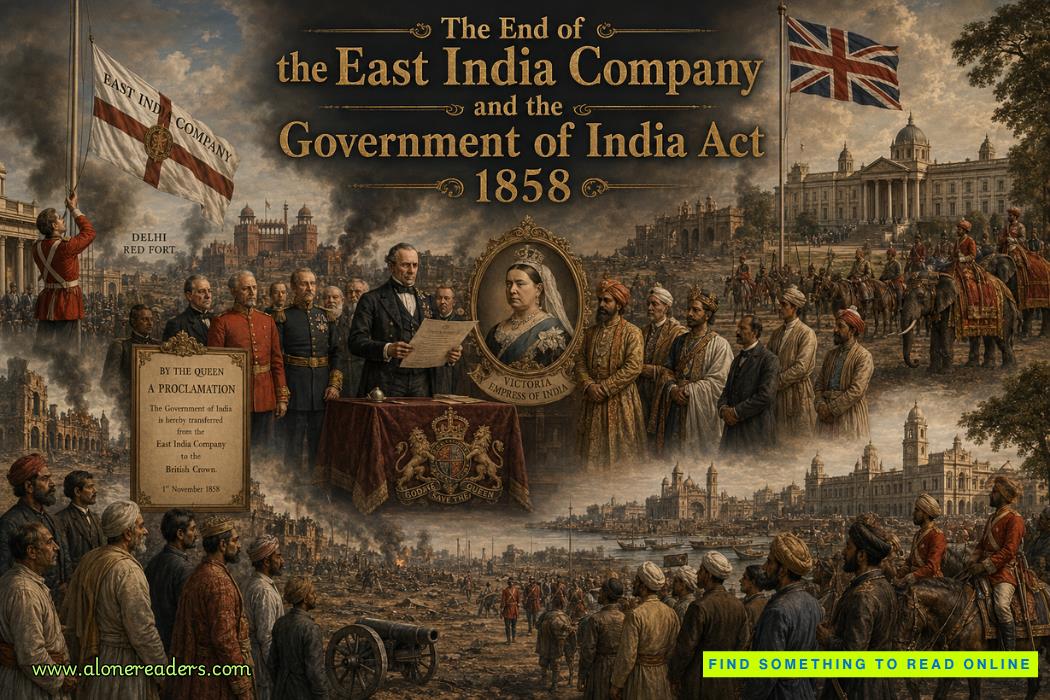
The immediate consequences of the violence were profound. By the middle of 1858, organized resistance had largely been crushed, but northern India had suffered enormous devastation. Major cities including Delhi, Lucknow, Kanpur, and numerous smaller towns bore the scars of prolonged warfare. Agricultural production declined in many regions, commercial activity was disrupted, and thousands of families were displaced. The rebellion also brought the end of the British East India Company. Through the Government of India Act of 1858, authority passed directly to the British Crown, fundamentally transforming the administration of India. The new government promised greater respect for Indian religious practices, abandoned further large-scale territorial annexations, and reorganized the Indian Army to reduce the possibility of another widespread military revolt.
Military reforms reflected lessons learned from the rebellion's violence. The proportion of European troops within the Indian Army increased significantly, artillery remained largely under British control, and recruitment shifted toward communities considered more loyal by colonial authorities. This policy contributed to the development of the so-called "martial races" theory, which profoundly influenced British military recruitment for the remainder of the colonial period. Administrative reforms also emphasized intelligence gathering, transportation infrastructure, and rapid communication, including expanded railway and telegraph networks designed to prevent future rebellions from spreading as they had in 1857.
The legacy of the rebellion's atrocities has remained remarkably resilient in both British and Indian historical memory. In Victorian Britain, the massacres at Cawnpore became central to imperial identity, appearing in paintings, novels, poems, and memorials that celebrated British endurance while portraying imperial rule as morally justified. These representations often ignored or minimized the brutality of British reprisals. In India, however, remembrance gradually evolved in a different direction. Nationalist writers highlighted the sacrifices of rebel leaders and emphasized colonial repression rather than focusing exclusively on rebel violence. After independence in 1947, commemorations increasingly presented the uprising as an early struggle against foreign domination, while acknowledging that it remained a complex conflict involving competing loyalties and regional interests.
Today, historians increasingly view the atrocities of the Indian Rebellion of 1857 as inseparable from the broader collapse of political order. Neither rebel massacres nor British reprisals occurred in isolation; each shaped and intensified the other in an escalating cycle of fear and vengeance. The rebellion demonstrated how rapidly warfare could descend into brutality when established authority disintegrated, communication failed, and combatants became convinced that mercy would not be reciprocated. It also illustrated how memory itself can become contested terrain, with different societies emphasizing different episodes to support broader narratives about empire, resistance, justice, and national identity.
The atrocities, massacres, and controversies of the Indian Rebellion of 1857 therefore remain among the conflict's most significant and enduring aspects. They challenge historians to move beyond simplified narratives of heroism or villainy and instead confront the complexities of civil conflict, colonial warfare, and human behavior under extreme circumstances. The rebellion was neither solely a tale of patriotic resistance nor merely a military mutiny marked by isolated crimes. It was a catastrophic struggle in which violence, retaliation, fear, and political transformation became inseparably linked. Understanding these events in their full historical context not only deepens our appreciation of the rebellion itself but also reveals why its memory continues to shape discussions of colonialism, nationalism, and historical justice more than a century and a half later.




 The Hundred Days Offensive: How the Allies Defeated Germany in World War I
 The Second Battle of the Marne: The Turning Point of World War I in 1918
 The Spring Offensive of 1918: Germany's Final Gamble to Win World War I
 The Treaty of Brest-Litovsk: How Russia Left World War I
 The Russian Revolution and World War I: How War Brought Down the Tsar
 The Zimmermann Telegram Explained: Germany's Secret Offer to Mexico in World War I