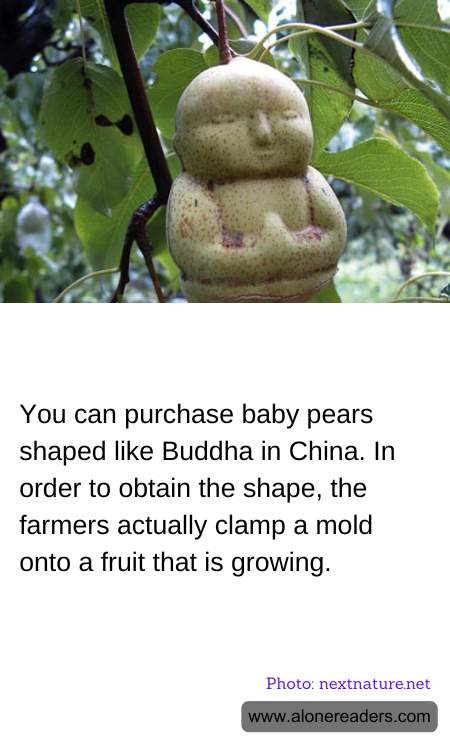
In an innovative blend of agriculture and artistry, farmers in China have created a unique product that is intriguing consumers worldwide: baby pears shaped like Buddha. This fascinating practice involves cultivating the pears inside molds that confine the fruit as it grows, forcing it to take on the shape of a small, sitting Buddha. The origins of this practice are deeply tied to both innovation in agricultural practices and cultural symbolism, reflecting an inventive approach to farming that also taps into the cultural heritage of the region.
The process begins when the pears are still small and unripe. Farmers place a plastic mold around each pear, which is typically shaped like a traditional depiction of Buddha sitting in meditation. As the fruit grows, it fills the mold completely, taking on its intricate details. The molds are designed to be split into two halves, allowing for easy removal once the pear has fully grown and taken shape. This technique not only adds a unique aesthetic appeal to the fruit but also ensures each piece is standardized in size and appearance.
Cultivating pears in this manner is not merely a gimmick; it holds significant cultural resonance. In Chinese culture, Buddha is a symbol of happiness, prosperity, and contentment, attributes that the farmers hope to invoke with these uniquely shaped pears. This aspect makes the Buddha pears particularly popular during festive seasons and in gift markets, where they are appreciated both for their novelty and their deeper cultural connotations.
However, the process is labor-intensive and requires precise timing and conditions. The right temperature and humidity levels are crucial for the proper growth of the pears inside the molds. Any errors in this delicate process could result in deformities in the fruit, making them unsellable. As a result, these Buddha-shaped pears are often more expensive than regular pears, reflecting the additional effort and resources involved in their cultivation.
Despite the higher cost, the demand for these pears continues to grow, not only in China but also in international markets, where they are often seen as a novelty item. They offer a unique example of how traditional farming techniques can be adapted to produce creative, culturally rich outcomes, capturing the imagination of consumers and offering new opportunities for farmers to add value to their crops.
