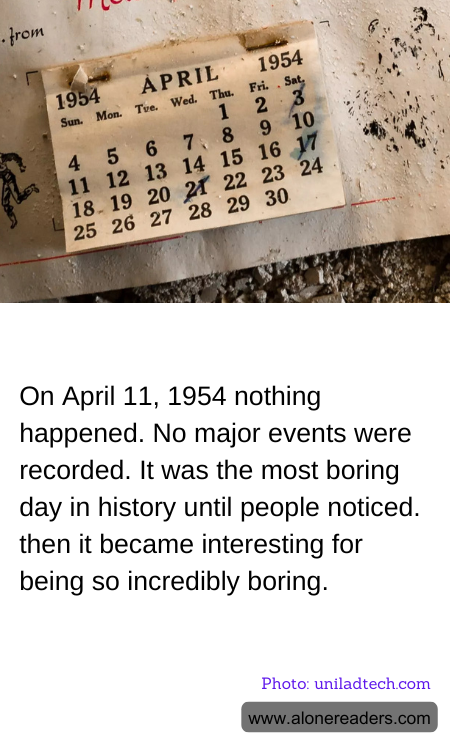
April 11, 1954, might initially appear to stand as an unremarkable blip in the continuum of history—a day when, ostensibly, nothing of significance occurred. This peculiarity was unearthed not through the dusty pages of a forgotten diary or the whispered secrets of an elder, but through the analytical prowess of modern technology. In a whimsical yet insightful exploration, a Cambridge computer scientist set out to identify the most boring day in the 20th century. Scrutinizing over 300 million facts from various historical databases, the algorithm concluded that April 11, 1954, was a day without a headline.
On that day, the newspapers trudged along with mundane reports: negligible shifts in politics, no groundbreaking scientific discoveries, no stirring speeches or catastrophic natural phenomena. It was a Sunday under the Aries zodiac sign, lacking notable birthdays or significant deaths, spared of dramatic economic crashes or exhilarating sports triumphs.
However, the very designation of April 11 as the "most boring day" sparked a curiosity that transcended its initial lack of distinction, making it a subject of intrigue. Often, in history, the absence of action can be as telling as its presence. The silence of that day serves as a mirror, reflecting the rhythm of ordinary lives—lives not usually captured in the thrill-seeking lens of history.
Instead of dismissing such moments in time, they should be celebrated as representational of the majority of human existence. These are the days filled with quiet moments of personal triumphs and losses, days where life moves forward in imperceptible increments. This newfound interest in a "boring" day challenges our understanding of what makes a day worth remembering, suggesting that perhaps in every overlooked nook of history, there lies an untold story waiting to be acknowledged and appreciated. Thus, while April 11, 1954, may be recorded as lacking global significance, it underscores the beautifully mundane reality that most days are, overwhelmingly, ordinary. And there is, indeed, something profoundly fascinating about that.
