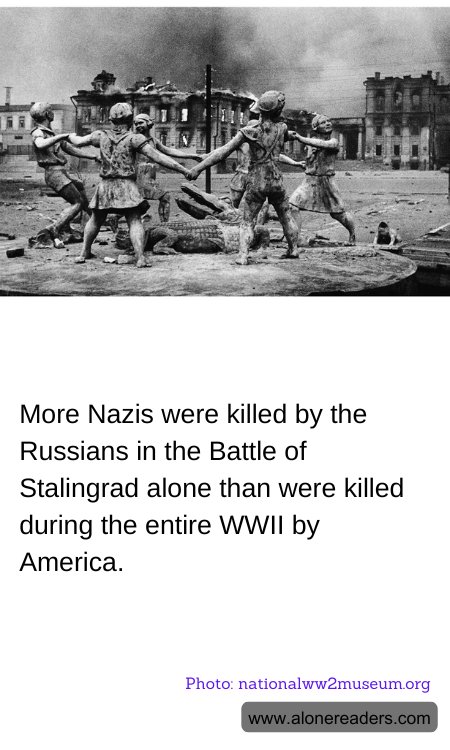
The Battle of Stalingrad, a pivotal confrontation during World War II, stands as one of the most brutal and significant battles in military history. Fought between the Axis powers led by Nazi Germany and the Soviet Union, this battle marked a turning point in the war. It is often noted for its staggering human cost and its strategic importance. One of the most striking facts about this battle is that more Nazis were killed in Stalingrad alone than were killed by American forces throughout the entire duration of World War II.
The Battle of Stalingrad began in the summer of 1942 and lasted until February 1943. It was characterized by fierce close-quarters combat and direct assaults on civilians by air raids. The battle was not only a fight for control of the city but also a symbolic struggle for both Adolf Hitler and Joseph Stalin. Hitler was determined to capture Stalingrad, a city that bore the name of his adversary, while Stalin was equally determined to defend it at all costs.
The Soviet Union's defense of Stalingrad was tenacious and unyielding. Soviet forces, under the command of General Vasily Chuikov, employed a strategy of attrition, drawing the German forces into the city where they were bogged down in brutal urban warfare. The harsh Russian winter further compounded the difficulties faced by the German troops, who were ill-prepared for the freezing temperatures and dwindling supplies.
The turning point came with Operation Uranus, a Soviet counteroffensive launched in November 1942. This operation encircled the German 6th Army, trapping them within the city. Despite Hitler's orders to hold their ground, the encircled German forces were eventually forced to surrender in February 1943. The defeat at Stalingrad was catastrophic for the Nazis, with estimates of German casualties, including those killed, wounded, or captured, reaching over 800,000.
In contrast, the United States, which entered the war after the attack on Pearl Harbor in December 1941, fought primarily in the Pacific and Western European theaters. While American forces played a crucial role in the defeat of the Axis powers, particularly in the liberation of Western Europe and the Pacific islands, the number of German soldiers killed by American forces was significantly lower than those lost at Stalingrad.
The Battle of Stalingrad was a testament to the resilience and sacrifice of the Soviet people and military. It not only marked the beginning of the German retreat on the Eastern Front but also demonstrated the immense human cost of war. The staggering loss of life at Stalingrad serves as a sobering reminder of the horrors of conflict and the profound impact of strategic military decisions. As history reflects on these events, the lessons learned continue to resonate, underscoring the importance of diplomacy and peace in preventing future conflicts.
