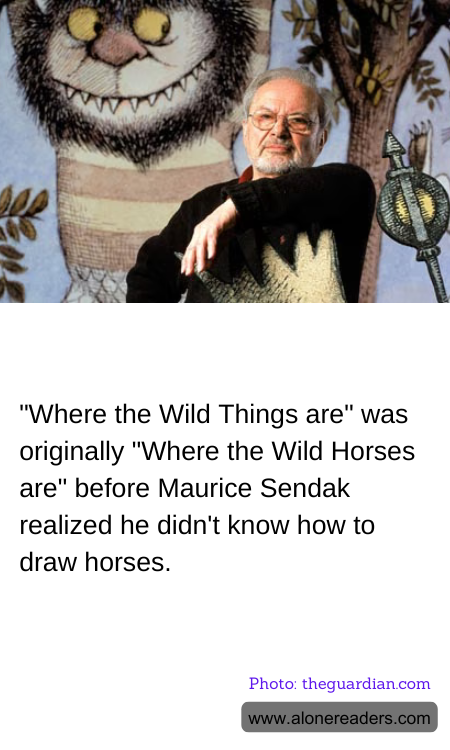
Maurice Sendak's beloved children's book, "Where the Wild Things Are," has enchanted readers for generations with its imaginative story and captivating illustrations. However, few people know that the book's original concept was quite different. Initially, Sendak envisioned a tale titled "Where the Wild Horses Are." This early version of the story was set to feature majestic horses as the central figures. Yet, a surprising twist in the creative process led to the transformation of these equine characters into the fantastical creatures we now know as the Wild Things.
The shift from horses to Wild Things was not a result of a grand artistic vision but rather a practical realization. Maurice Sendak, despite his immense talent as an illustrator, found himself struggling with the task of drawing horses. Horses, with their complex anatomy and graceful movements, presented a challenge that Sendak felt he could not overcome to his satisfaction. Instead of letting this obstacle derail his project, Sendak embraced it as an opportunity to explore new creative avenues.
This decision to pivot from horses to the Wild Things was a turning point that ultimately defined the book's unique charm. By allowing his imagination to roam free, Sendak created a world inhabited by whimsical creatures that were both fearsome and endearing. The Wild Things, with their exaggerated features and expressive faces, captured the essence of childhood fantasies and fears. This transformation not only solved Sendak's artistic dilemma but also enriched the narrative, adding layers of depth and intrigue to the story.
The change in direction also allowed Sendak to delve deeper into the emotional landscape of his protagonist, Max. In the company of the Wild Things, Max's journey becomes a metaphor for the exploration of emotions, imagination, and the complexities of growing up. The Wild Things, with their untamed nature, serve as a perfect foil to Max's inner turmoil, making the story resonate with readers of all ages.
"Where the Wild Things Are" stands as a testament to the power of adaptability and creativity. Maurice Sendak's willingness to embrace his limitations and transform them into strengths is a lesson in artistic resilience. The book's enduring popularity is a reflection of its universal themes and the magical world that Sendak brought to life through his illustrations and storytelling.
In the end, the Wild Things became more than just a solution to an artistic challenge; they became iconic figures in children's literature. Maurice Sendak's journey from "Where the Wild Horses Are" to "Where the Wild Things Are" is a reminder that sometimes the most memorable creations arise from unexpected beginnings. Through his imaginative vision and willingness to adapt, Sendak crafted a timeless tale that continues to inspire and captivate readers around the world.
