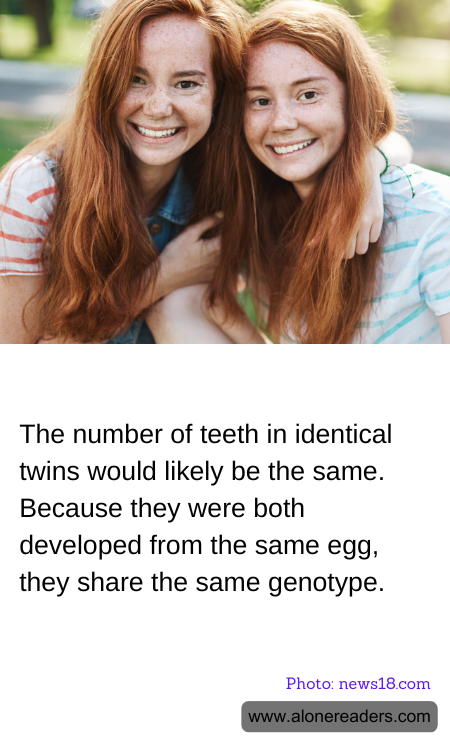
Identical twins have long fascinated scientists and the general public alike, primarily due to their remarkable genetic similarities. These twins originate from a single fertilized egg that splits into two, resulting in two individuals with the same genetic makeup, or genotype. This shared genetic foundation often leads to striking similarities in physical traits, including the number of teeth.
The development of teeth is a complex process influenced by both genetic and environmental factors. However, in the case of identical twins, the genetic component plays a dominant role. Since they share the same DNA, identical twins are likely to have the same number of teeth. This is because the genes responsible for dental development, such as those that determine the number, size, and shape of teeth, are identical in both individuals. Consequently, barring any significant environmental influences or health issues, identical twins will typically exhibit the same dental characteristics.
While the genetic blueprint is identical, it is important to note that environmental factors can still have an impact. For instance, nutrition, oral hygiene, and exposure to certain medications or chemicals during critical periods of dental development can influence the final outcome. Despite these potential variations, the genetic predisposition in identical twins provides a strong foundation for similarities in dental characteristics.
In addition to the number of teeth, identical twins often share other dental traits, such as the timing of tooth eruption and the alignment of their teeth. This can be attributed to the shared genetic instructions that guide the development of their dental structures. However, even with these similarities, it is not uncommon for identical twins to experience slight differences in their dental health due to individual lifestyle choices and environmental exposures.
The study of identical twins offers valuable insights into the role of genetics in dental development and health. By examining the similarities and differences in their dental characteristics, researchers can better understand the interplay between genetics and environment. This knowledge can ultimately contribute to improved dental care and preventive strategies for the general population.
In conclusion, the number of teeth in identical twins is likely to be the same due to their shared genetic makeup. While environmental factors can introduce some variability, the genetic foundation remains a significant determinant of their dental characteristics. This fascinating aspect of identical twins not only highlights the power of genetics but also underscores the importance of considering both genetic and environmental influences in understanding human development.
