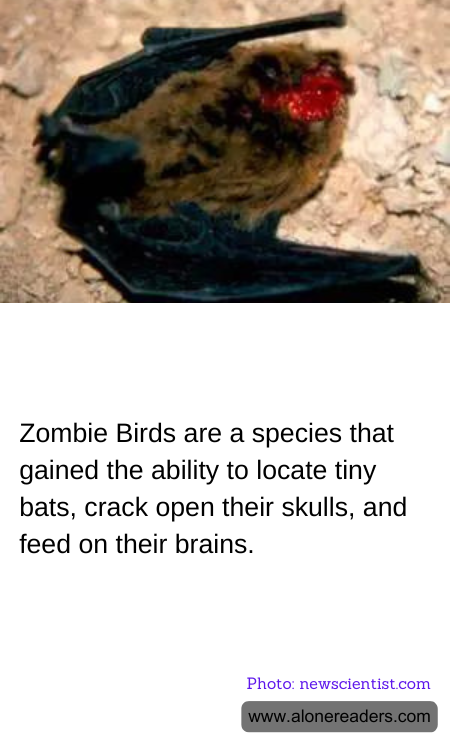
In the mysterious realms of nature, where evolution often takes unexpected turns, a peculiar species has emerged, captivating the curiosity of scientists and nature enthusiasts alike. Dubbed "Zombie Birds," these avian predators have developed a unique and somewhat macabre adaptation: the ability to locate tiny bats, crack open their skulls, and feed on their brains. This intriguing behavior has sparked both fascination and concern among researchers studying the delicate balance of ecosystems.
Zombie Birds, with their striking plumage and keen senses, have evolved to thrive in environments where bats are abundant. These birds possess an extraordinary ability to detect the faintest sounds and movements of their nocturnal prey. Their acute hearing and sharp vision allow them to pinpoint the location of bats, even in the darkest of nights. Once a target is identified, the birds employ their strong, specialized beaks to crack open the skulls of the bats, accessing the nutrient-rich brains within.
This behavior, while unsettling to some, is a testament to the incredible adaptability of species in the wild. The brains of bats provide Zombie Birds with a concentrated source of essential nutrients, including fats and proteins, which are crucial for their survival and reproductive success. This dietary specialization has allowed them to carve out a niche in their ecosystem, reducing competition with other bird species that may rely on more conventional food sources.
The emergence of Zombie Birds raises important questions about the dynamics of predator-prey relationships and the impact of such specialized feeding habits on local ecosystems. While their predation on bats may seem alarming, it is essential to consider the broader ecological context. Bats, known for their role in pollination and insect control, are vital to many ecosystems. The presence of Zombie Birds could potentially influence bat populations, leading to cascading effects on plant pollination and insect populations.
Researchers are keen to understand the long-term implications of this behavior. Studies are underway to assess the population dynamics of both Zombie Birds and their bat prey, as well as the potential consequences for the ecosystems they inhabit. Conservationists are also monitoring these developments to ensure that any interventions, if necessary, are based on a comprehensive understanding of the ecological interactions at play.
In the grand tapestry of nature, the story of Zombie Birds serves as a reminder of the intricate and often surprising ways in which life adapts and evolves. While their feeding habits may seem like something out of a horror movie, they are a natural part of the complex web of life. As researchers continue to unravel the mysteries of these enigmatic birds, they offer us a glimpse into the ever-evolving dance of survival and adaptation in the natural world.
