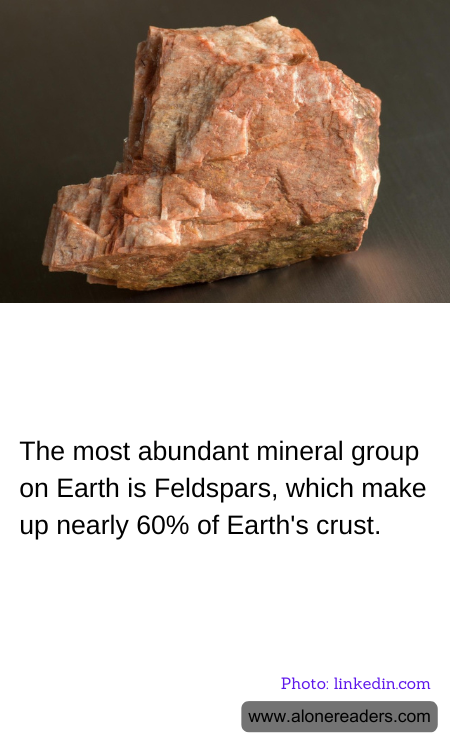
Feldspars are the unsung heroes of the Earth's crust, quietly composing nearly 60% of its structure. This makes them the most abundant mineral group on our planet. Found in a variety of geological environments, feldspars are integral to the composition of igneous, metamorphic, and sedimentary rocks. Their prevalence and versatility make them a cornerstone of geology and an essential component of the Earth's surface.
The feldspar group is divided into two primary subcategories: plagioclase and orthoclase. Plagioclase feldspars are a series of minerals that range from calcium-rich to sodium-rich compositions, while orthoclase feldspars are primarily potassium-rich. These minerals are not only abundant but also diverse, forming a wide range of colors and structures. This diversity is due to their complex chemical compositions and the conditions under which they form, such as temperature and pressure variations deep within the Earth.
Feldspars play a crucial role in the rock cycle. They are key constituents of igneous rocks like granite and basalt, which form from the cooling of molten magma. As these rocks weather over time, feldspars break down into clay minerals and other secondary products, contributing to soil formation. This process is vital for sustaining plant life, as it enriches the soil with essential nutrients. Additionally, feldspars are involved in the formation of sedimentary rocks through the accumulation and compaction of mineral fragments.
Beyond their geological significance, feldspars have practical applications in various industries. They are used in the manufacturing of glass and ceramics, where their high melting point and chemical stability are advantageous. Feldspars also serve as fillers in paints, plastics, and rubber, enhancing the properties of these materials. Their widespread use in everyday products underscores their importance beyond the realm of geology.
Despite their abundance, feldspars often go unnoticed by the general public. However, their presence is felt in the landscapes we admire, the soil that nourishes our crops, and the materials that make up our daily lives. Understanding feldspars and their role in Earth's crust provides insight into the dynamic processes that shape our planet. As we continue to explore and study the Earth, feldspars will remain a fundamental component of our geological heritage, quietly supporting the intricate web of life and industry that thrives on the surface.
