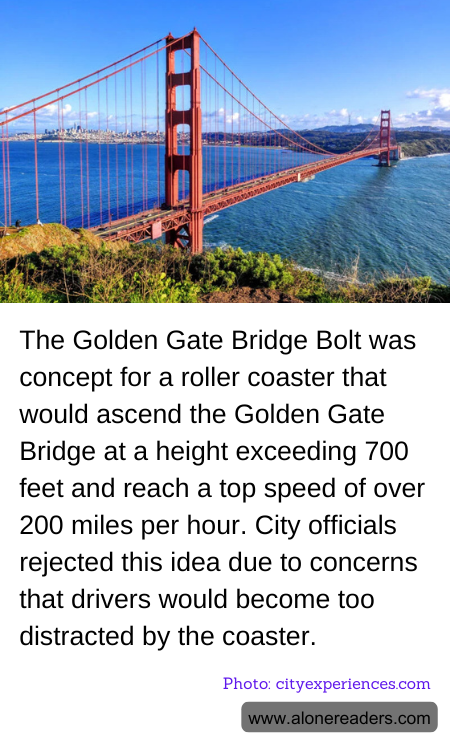
In the realm of ambitious engineering and thrill-seeking innovation, few concepts have captured the imagination quite like the Golden Gate Bridge Bolt. This audacious proposal envisioned a roller coaster that would ascend the iconic Golden Gate Bridge, reaching a staggering height of over 700 feet and achieving speeds in excess of 200 miles per hour. While the idea was undoubtedly exhilarating, it ultimately faced rejection from city officials, who expressed concerns about the potential for driver distraction.
The Golden Gate Bridge, a marvel of modern engineering and a symbol of San Francisco, has long been a source of inspiration for architects and designers. The Bolt concept sought to capitalize on this inspiration, offering a unique blend of breathtaking views and adrenaline-pumping excitement. The proposed roller coaster would have provided riders with an unparalleled experience, combining the thrill of high-speed travel with the stunning backdrop of the San Francisco Bay.
However, the proposal was met with significant opposition from city officials. The primary concern was the potential for the roller coaster to distract drivers crossing the bridge. The Golden Gate Bridge is not only a critical transportation link but also a heavily trafficked route, with thousands of vehicles traversing it daily. Officials feared that the presence of a high-speed roller coaster could lead to increased accidents and congestion, posing a risk to both drivers and the structural integrity of the bridge itself.
In addition to safety concerns, there were also questions about the feasibility and environmental impact of such a project. The construction of a roller coaster on a historic landmark like the Golden Gate Bridge would have required extensive modifications and could have potentially disrupted the delicate ecosystem of the surrounding area. Preservationists and environmentalists voiced their opposition, emphasizing the importance of maintaining the bridge's historical and ecological significance.
Despite the rejection of the Golden Gate Bridge Bolt, the concept remains a testament to human creativity and the desire to push the boundaries of what is possible. It serves as a reminder of the delicate balance between innovation and preservation, highlighting the need to carefully consider the implications of ambitious projects on both the environment and public safety.
While the Bolt may never come to fruition, it has sparked conversations about the future of urban entertainment and the potential for integrating thrill rides into cityscapes. As technology continues to advance, it is likely that new and exciting proposals will emerge, challenging us to rethink the possibilities of urban design and entertainment. For now, the Golden Gate Bridge stands as a testament to engineering prowess and remains a beloved landmark, free from the distractions of high-speed roller coasters, yet forever inspiring the imaginations of those who dream of what could be.
