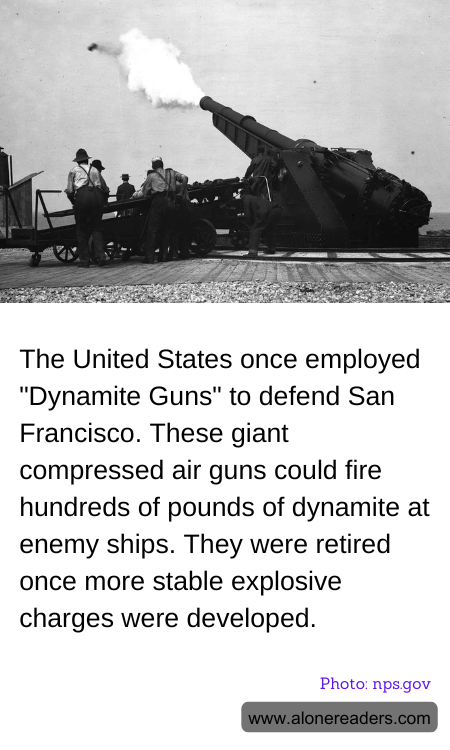
In the late 19th century, the United States embarked on an innovative yet short-lived experiment in coastal defense with the deployment of "dynamite guns" to protect key locations, including the strategic harbor of San Francisco. These formidable weapons, a product of the era's technological ingenuity, were designed to launch explosive projectiles using compressed air rather than traditional gunpowder. This method aimed to safely propel large quantities of dynamite, a notoriously unstable explosive, over considerable distances to deter and disable enemy ships threatening the American coastline.
The dynamite gun was a remarkable feat of engineering for its time. Unlike conventional artillery, which relied on explosive charges to propel shells, the dynamite gun used compressed air to gently accelerate its payload. This approach minimized the risk of premature detonation, a significant concern given the volatility of dynamite. The guns could fire projectiles weighing several hundred pounds, making them a formidable deterrent against naval threats. The concept was simple yet effective: deliver a massive explosive charge with precision and safety, thereby enhancing the defensive capabilities of coastal fortifications.
San Francisco, with its bustling port and strategic importance, was a prime candidate for such advanced defenses. The dynamite guns were installed at key locations around the bay, ready to unleash their destructive power should enemy vessels attempt to breach the harbor. The presence of these guns was intended to serve as a powerful deterrent, showcasing the United States' commitment to protecting its shores with cutting-edge technology.
However, the dynamite gun's tenure in the U.S. military arsenal was relatively brief. As the 20th century dawned, advancements in explosive technology rendered these guns obsolete. More stable and reliable explosive charges were developed, allowing for the safe use of traditional artillery methods without the inherent risks associated with dynamite. The dynamite guns, once a symbol of innovation, were gradually phased out in favor of these more practical and efficient solutions.
Despite their short service life, dynamite guns remain a fascinating chapter in the history of military technology. They represent a period of experimentation and adaptation, as nations sought to harness the power of new inventions to bolster their defenses. Today, the legacy of the dynamite gun serves as a reminder of the ever-evolving nature of military strategy and the relentless pursuit of technological advancement in the quest for security.
