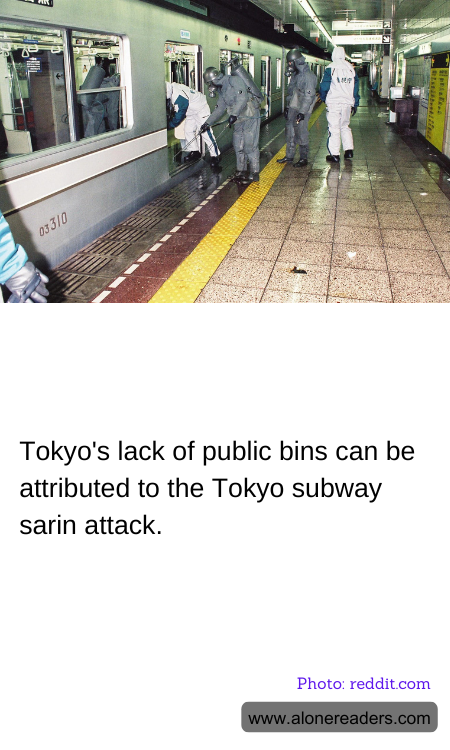
Tokyo, a city renowned for its cleanliness and efficiency, presents an intriguing paradox to its visitors: the conspicuous absence of public trash bins. This scarcity is not a mere oversight but a deliberate decision rooted in a tragic chapter of the city's history—the Tokyo subway sarin attack of 1995.
On March 20, 1995, Tokyo was rocked by a coordinated terrorist attack when members of the Aum Shinrikyo cult released sarin gas on the subway system. This heinous act resulted in the deaths of 13 people and injured over 5,000 others, leaving an indelible mark on the city and its residents. In the aftermath, public safety became a paramount concern, leading to a reevaluation of potential security risks in public spaces.
One of the measures taken to enhance security was the removal of public trash bins, particularly in and around subway stations. Authorities feared that bins could be used to conceal dangerous items, such as explosives or chemical agents, posing a threat to public safety. This decision, while initially a response to an immediate threat, has persisted over the years, becoming a characteristic feature of Tokyo's urban landscape.
Despite the inconvenience it might pose to residents and tourists alike, the absence of public bins has not led to a decline in the city's cleanliness. On the contrary, Tokyo remains one of the cleanest cities in the world. This is largely due to the cultural emphasis on personal responsibility and civic duty. Residents are accustomed to carrying their trash with them until they find a suitable place to dispose of it, often at home or in designated areas within businesses and train stations.
Moreover, the lack of public bins has inadvertently fostered a culture of minimal waste generation. People are more conscious of the waste they produce, often opting for reusable items and reducing unnecessary packaging. This cultural shift aligns with broader environmental goals, contributing to a more sustainable urban environment.
While the absence of public bins might initially perplex visitors, it serves as a poignant reminder of the city's resilience and adaptability in the face of adversity. Tokyo's approach to public safety and cleanliness reflects a unique blend of historical awareness and cultural values, ensuring that the city remains both secure and pristine.
In conclusion, the scarcity of public bins in Tokyo is a legacy of the tragic subway sarin attack, a decision rooted in the need for heightened security. Yet, it has also become a testament to the city's commitment to cleanliness and environmental consciousness, demonstrating how a community can adapt and thrive in the wake of tragedy.
