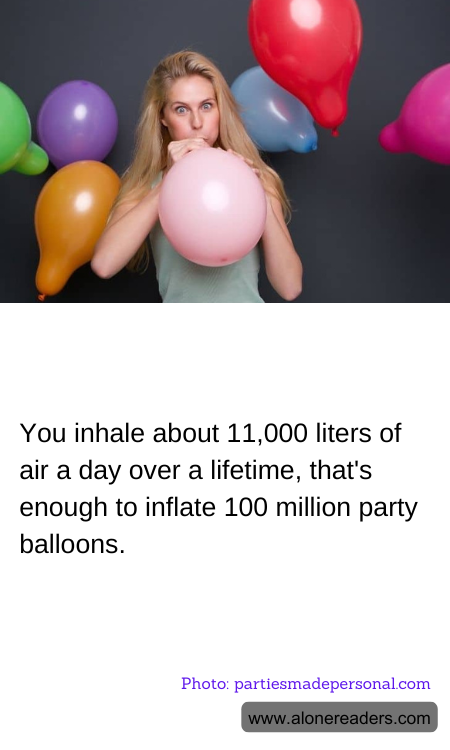
Breathing is an involuntary action that we often take for granted, yet it is one of the most vital processes for sustaining life. On average, a person inhales about 11,000 liters of air each day. This staggering amount of air is essential for delivering oxygen to our cells and removing carbon dioxide from our bodies. Over a lifetime, this daily intake accumulates to an astonishing volume, enough to inflate approximately 100 million party balloons.
The air we breathe is a mixture of gases, primarily composed of nitrogen and oxygen, with small amounts of carbon dioxide, argon, and other trace gases. Oxygen is crucial for cellular respiration, a process that releases energy from food, enabling us to perform everyday activities. The lungs, with their intricate network of alveoli, facilitate the exchange of gases, ensuring that oxygen enters the bloodstream while carbon dioxide is expelled.
To put the volume of air we inhale into perspective, consider a standard party balloon, which holds about one liter of air. If you were to inflate a balloon with every liter of air you breathe, you would fill around 11,000 balloons each day. Over an average lifespan of 80 years, this would amount to roughly 320 million liters of air, or the equivalent of inflating 100 million balloons. This visualization underscores the sheer volume of air that passes through our lungs over a lifetime.
The quality of the air we breathe is just as important as the quantity. Clean air is vital for maintaining good health, as pollutants and allergens can lead to respiratory issues and other health problems. Urban areas, with their higher levels of pollution, pose a greater risk, making it essential for individuals to be mindful of air quality and take steps to minimize exposure to harmful substances. Simple measures, such as using air purifiers indoors, planting trees, and supporting clean energy initiatives, can contribute to better air quality and, consequently, better health.
Breathing is a remarkable process that not only sustains life but also connects us to the environment. Each breath we take is a reminder of our reliance on the natural world and the importance of preserving it for future generations. By understanding the significance of the air we inhale and taking steps to protect its quality, we can ensure a healthier future for ourselves and the planet.
